
April Newsletter: School. Work. Life. The velocity crisis is everywhere.
THE VELOCITY CRISIS
You know the feeling, even if you can’t name it yet.
Here's what it feels like in the morning: you wake up, check your phone, and the world has generated more in eight hours than you can process in a day. A policy reversed. A market moved. A city bombed. A person you admired, disgraced. A thing you counted on, gone.
Here's what it feels like at school: the kids are exhausted in ways that don't match their age. The teachers are exhausted in ways that don't match the job description. The curriculum is being contested — sometimes literally pulled from shelves — while the actual need, the one beneath it all, goes unnamed. We have not built enough conditions for young people to think.
Here's what it feels like at work: the pace is unsustainable, everyone knows it, but nobody says it out loud in meetings. Performance is up because it has to be. Connection is down because there isn't enough time. The organization says it values its people, yet structures its days in ways that prove otherwise. You perform engagement and call it a career.
Here's what it feels like in civic life: the courts are being packed and hollowed simultaneously. Universities that spent decades positioning themselves as bastions of free inquiry are capitulating to executive orders in real time, in writing, without a fight. The press is being silenced or bought into compliance. Federal agencies that existed to protect people are being dismantled by the people appointed to run them. Books are being pulled from libraries by officials who have not read them. DEI programs — meaning: the institutional acknowledgment that not everyone started from the same place — are being eliminated as a political project dressed as fiscal responsibility.

And underneath all of it: a man who attempted to overturn an election was convicted of dozens of felonies and was returned to power anyway. We can call this what it is. Fascism is not a slur — it is a word with a definition, and the definition fits. The velocity crisis didn't cause this. But it created the conditions: exhaust people enough, flood the zone with enough noise, collapse the interval between event and ethical processing, and the machinery of democratic accountability cannot keep up.
You watched the parties perform their roles and realized you are no longer a reliable participant in that performance. Not because you don't care. Because you care so much that the available containers feel inadequate to what the moment actually requires. The team jerseys feel like a trick. The outrage cycles feel designed to exhaust rather than mobilize. You are politically homeless — not because you gave up, but because you woke up.
The sociologist Hartmut Rosa calls this the velocity crisis: the widening gap between the speed at which the world changes and the speed at which human beings can make ethical sense of what is happening. We built systems — educational, economic, civic — that move faster than conscience. Faster than relationship. Faster than democracy.
 KP Williams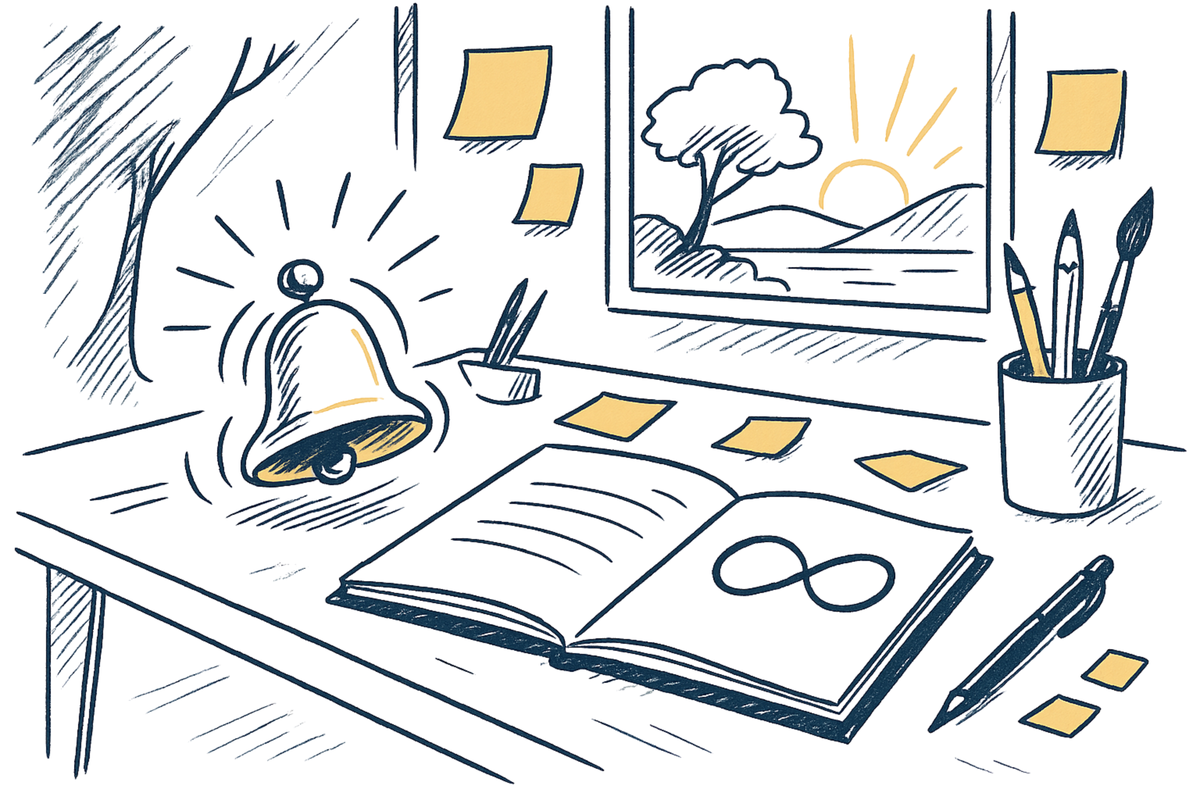
Rosa's diagnosis: dynamic stabilization — the imperative to grow, accelerate, and innovate at all costs, producing a world in which acceleration is not an episode but the operating condition. The default setting. The water we swim in.
The result: a wealth of information creates a poverty of attention. Herbert Simon wrote that in 1971. He saw it coming. Average screen attention has dropped from 150 seconds to 47 seconds over the past two decades. The slow, deliberate, ethical reasoning that asks, 'Is this right?' cannot operate under these conditions. Zone-flooding — the deliberate saturation of the information environment with noise, crisis, and outrage — is not incidental. It is a strategy. It works by making careful thought impossible.
This is the velocity crisis. And it is happening in your classroom, your workplace, your city council, your family group chat, and your body — simultaneously.
Those of us who came of age as millennials inherited a world unlike the one we were promised — and unlike the one for which we were told to prepare. We did everything right. We got the degrees (and the debt). We showed up. We followed the script. And we emerged into an economy that had already decided we were a resource to be optimized, not people to be supported. Now, entry-level jobs require advanced degrees, 5 years of experience, and proficiency in AI tools that are simultaneously being positioned to replace us. The creativity we were never quite allowed to keep — the play, the productive friction, the analog encounter, the unstructured afternoon — has been systematically extracted from school, work, and civic life alike. We were handed a permission slip that had already expired.
P.L.A.Y. as Protest
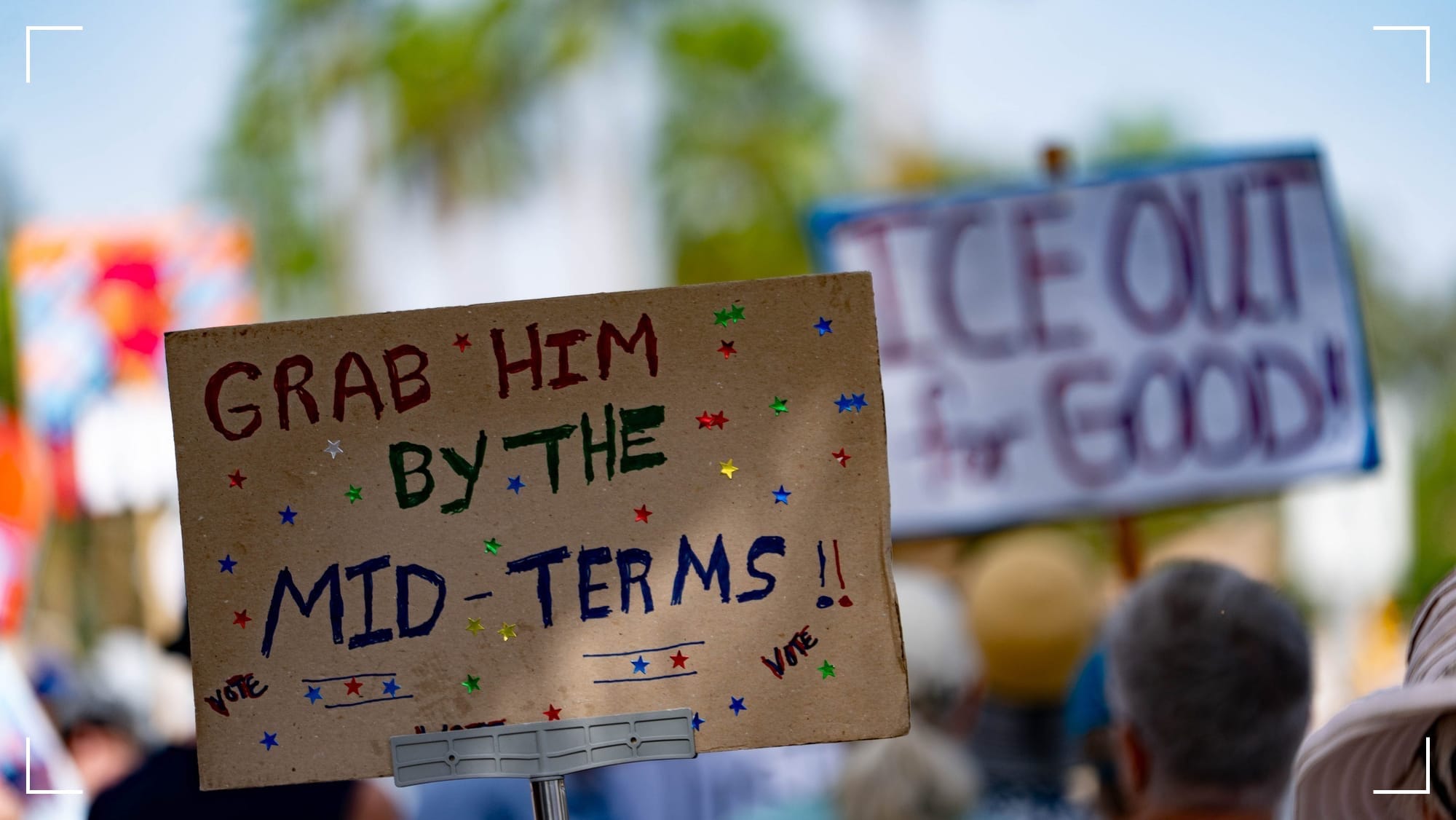
On March 28, 8 million people took to the streets in 3,300 cities. No Kings. The largest single-day protest in American history. Bubbles, music, protest choirs, drag, inflatable animals, and every form of creative civic encounter, simultaneously. It was extraordinary. It was necessary. It was the Suits game of democracy — striving play, intrinsically motivated, unscored.
I've been thinking about what happened on March 28 through the PLAY framework — not to academicize a march, but because the four dimensions showed up so completely that week I couldn't unsee it.
 KP Williams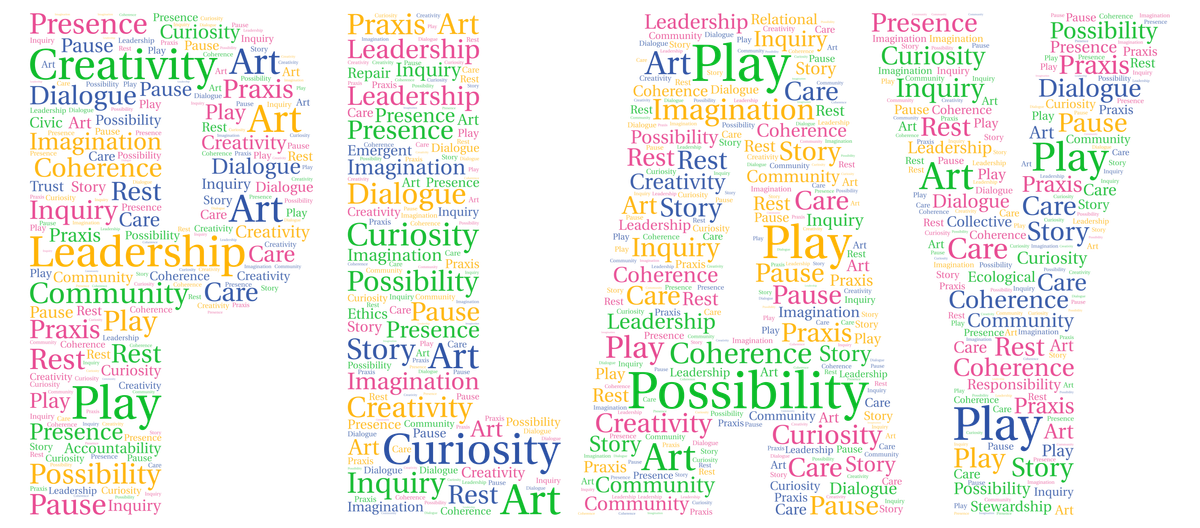
And then Monday came. The question underneath the question: what happens in the interval between the protest and the next election? How is that energy captured, composted, and cultivated? What do you do with the collective power that was briefly, beautifully visible in the streets — on a Tuesday morning, when the news cycle has already moved on, and the outrage machine is already generating the next emergency?
This is the interval. The gap between civic action and civic capacity. The space where either nothing happens — and the energy dissipates into exhaustion — or something gets tended. Relationships deepened. Language sharpened. Creativity reclaimed. The conditions built for what comes next.
Recess is the interval. Reclaim creativity. Reclaim citizenship. Reclaim cooperation.
Creative Recess does not offer more band-aid fixes for the current messes we are in.
It does not offer you a morning routine that makes the acceleration feel manageable. It does not offer you a partisan team to join, a villain to focus on, or a five-step framework for thriving in a burning world. It does not offer you the productive delusion that individual optimization is a substitute for structural change.
What it offers instead is this: cultivating the conditions.
Not the answers. The conditions under which you can think clearly enough to find your own. The conditions under which leadership emerges between people rather than being performed at them. The conditions under which a shared possible future becomes imaginable — not because someone handed it to you, but because you tended the soil long enough to grow it.
The people doing the most necessary work right now — the teachers, the organizers, the caregivers, the civic creatives, the politically unhoused and stubbornly awake — deserve something more than another subscription to their own overwhelm.
Recess before revolution. Not because revolution isn't needed. Because exhausted people cannot build what the moment requires.
The permission slip — sign your own permission slip for a Creative Recess — is not a cute metaphor for self-care. It is the act of someone who has decided that acceleration no longer gets to set the terms of their attention. That is not passive. That is the beginning.
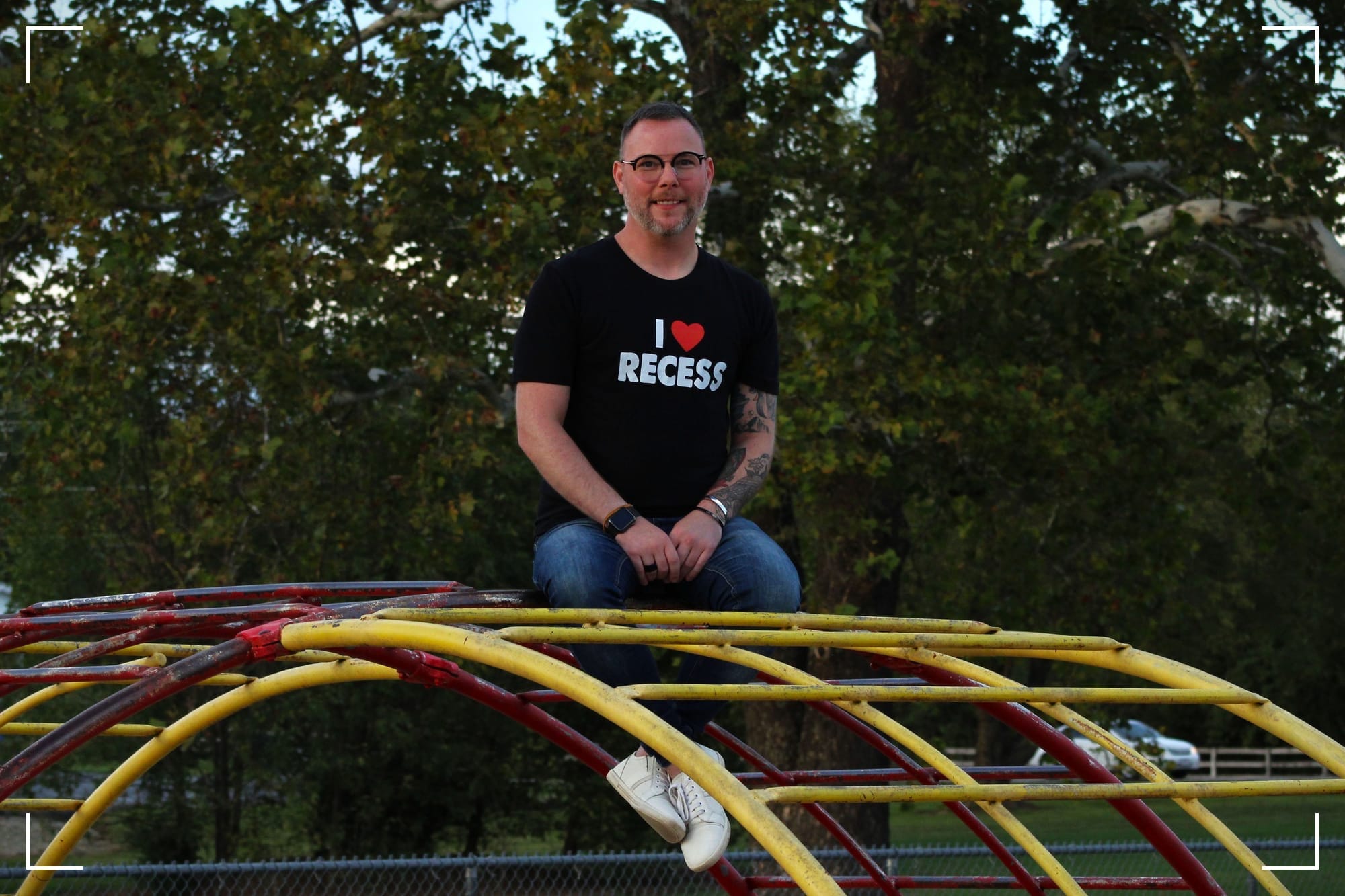
What I've been building — and where I am.
A brief timeline, because context matters.
I left Iowa State University in January 2025. Seven years of term faculty work — courses on inclusive leadership, women and gender and leadership, leadership theory and practice, leading change. Courses the institution made untenable not through overt censorship but through the ambient pressure of a political climate that decided equity work was the problem. I left before they could finish making that argument stick.
I returned to the Bluegrass in July. Back to Kentucky — the state I grew up in, the county I came from, the river I swam in as a child. I survived my first Kentucky winter in a long time. The kind of winter that makes you remember what it costs to go still.
 KP Williams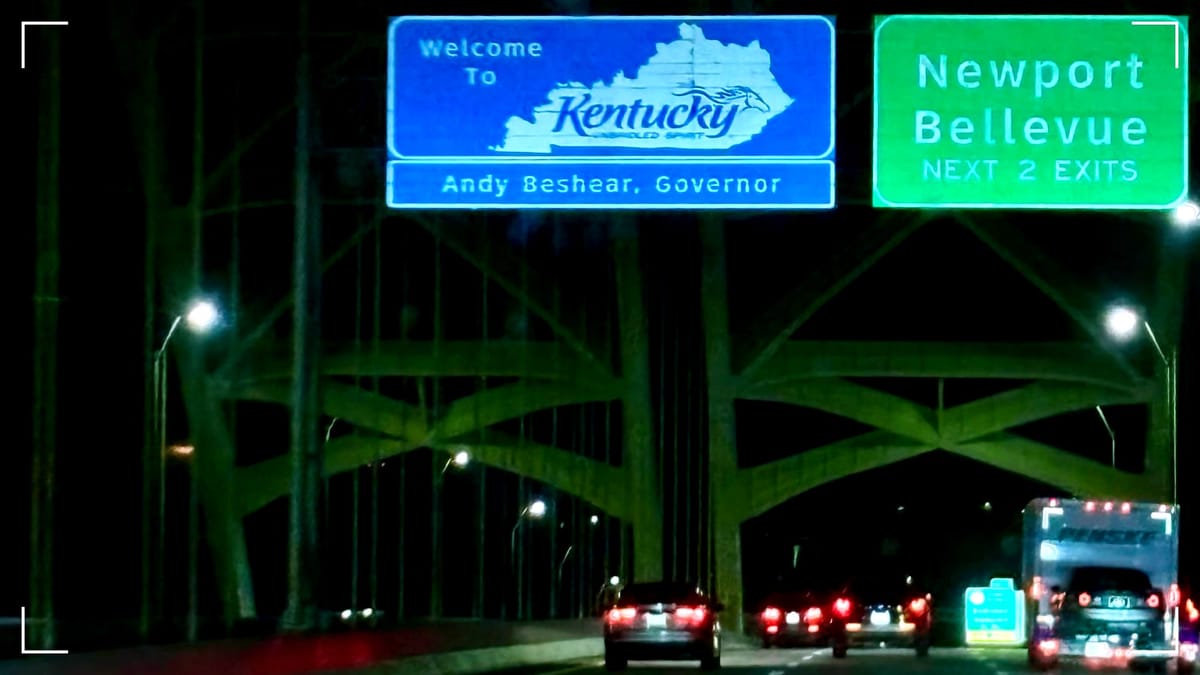
On March 19 — my birthday, the Pisces new moon — I turned 38 and began a new lap around the sun. A year of building in the dark: the canon, the frameworks, the book architecture, the infrastructure of a practice ecology that didn't yet have a community inside it.
Now Spring has finally sprung. The ground is thawing. And after a year of building, I'm ready to start playing — with other people, in the playground. That's what this dispatch is about.
Here's the shape of what's coming:
The first book — Humanity Is the Infinite Game — is a civic and philosophical argument for encounter as the practice that keeps democracy, learning, and creative life possible under acceleration. It's for anyone who has felt the velocity crisis and wants more than a diagnosis: educators, leaders, organizers, artists, and the civically unhoused who refuse to stop caring.
The second book — Creative Recess: Arts-Based Creative Leadership for Everyone — is the permission slip made practical. It's for the person who was told, somewhere along the way, that creativity wasn't for them. That leadership was someone else's job. That the arts were decoration and not infrastructure. It's wrong on all three counts and this book says so, with evidence and practice.
Alongside both: three short guides — Reimagining School, Reimagining Work, Reimagining Life — for the person who wants the argument applied to the specific container they're trying to survive or exit or compost right now.
And the practice ecology itself — the Circles, the PLAY LABs, the coaching, the monthly Recess Gatherings — is where the theory becomes encounter. This is the mycelium doing its underground work. You won't see a finished book for a while. But you can watch it being built — and that is one of the things Creative Recess membership makes possible.

The velocity crisis has a face. Here's one I sat across from recently.
I recently sat at a kitchen table helping a family friend and her daughter review the daughter's estimated financial aid package for her first year of college out of state. Her mother has worked in a factory for over twenty years. She has been on an imminent closure/layoff notice — extended, extended, extended — for at least the past year.
The slow violence of perpetual precarity rather than a clean break.
The financial aid package is the velocity crisis made personal: a number that tells an 18-year-old what her future costs and whether she can afford to want it. It feels objective. It isn't. It is a container — designed by institutions, shaped by historical inequity, carrying the weight of every student before her who navigated the same calculation.
I grew up on the same river she did. I navigated the same calculus. I have a Ph.D. now, and I can sit at that table and help her read the document.
That is what Creative Recess is for. Not for people who have already figured it out. For people trying to figure it out — including me — who need the language, the interval, and the community to think clearly in fast times.
Curiosity – What I'm thinking about this month:
The philosopher Bernard Suits defined games as "voluntarily undertaking unnecessary obstacles in order to create the experience of struggling to overcome them." Before the score arrived — before school, before the performance review, before the metrics — you were playing a Suits game. Intrinsically motivated. Unscored. The point was the doing.
Clarity – One thing named precisely:
Objectivity laundering: C. Thi Nguyen's term (from The Score, 2026) for the process by which institutions disguise ideological choices behind metrics that appear impartial. The grade feels objective. The performance review feels objective. The financial aid formula feels objective. The tariff feels objective. They are all containers — built by people, shaped by power — that have captured the values they were designed to serve.
 KP Williams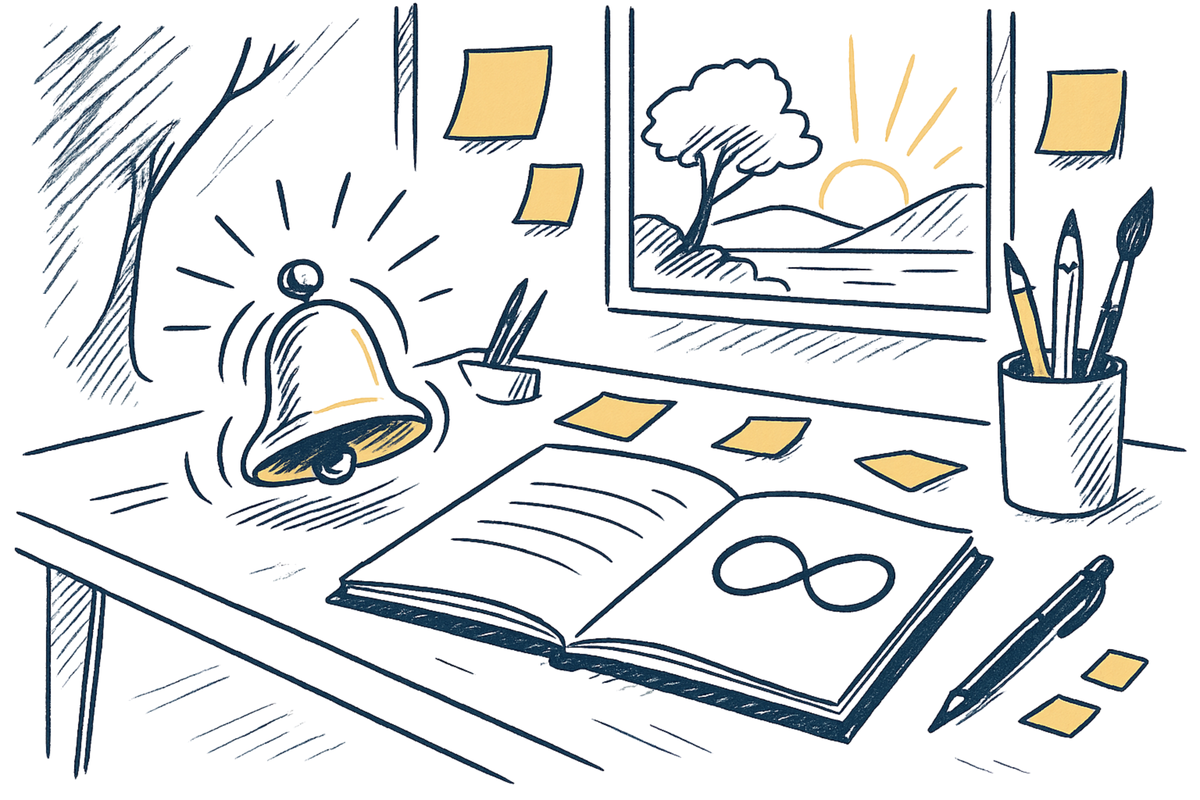
Creativity – What I made this month that you can see:
I've been documenting the book project in real time. The biographical spine — the Licking River, the flood of March 2, 1997, my mother keeping the official record of the rupture and the rebuilding — finally made it into the canon. The river is the book's cosmological ground. Not as metaphor. As the specific water that formed the specific child who is now writing this.
 KP Williams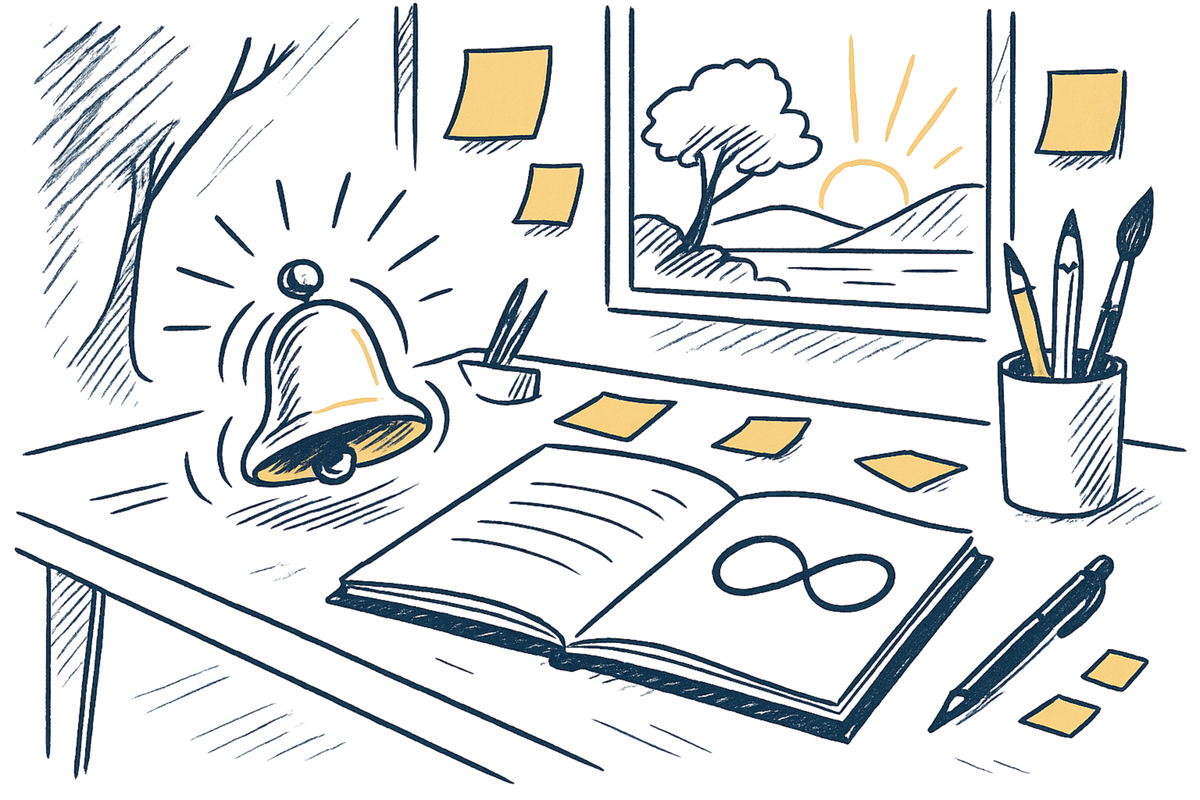
Community – The ask, made plainly:
Creative Recess is in its first operational year, pre-revenue as a sustainable business. The work I’ve built over the past months — the book spines, the guides, the canon, the overnight sprints — all of it is self-funded. Built on discipline. Built on something I call Play It Forward.
Play It Forward is how Creative Recess practices economic imagination — not as theory, but as lived design. It means sustaining this work without selling its soul. Participating in imperfect systems without surrendering integrity. Ghost doesn't take a cut. No ads. No selling your attention to platforms that profit from your exhaustion. The membership model is the argument made structural: direct support, direct relationship, reciprocity with teeth.
AmeriCorps taught me how narrow the margins can be. The Ryan White CARE Act continues to make my life — and this work — possible. Those experiences shape how Creative Recess approaches money and labor: with respect for precarity, with honesty about limits, without romanticizing struggle. I don't work for free — and I don't work to extract. I work to play it forward. If you'd like to read more about how this works in practice: creativerecess.me/play-it-forward/ →
Playground ($10/month): Access to the Possibility Pages archive, the full canon documents, and the growing library of frameworks and tools. The place where the work lives between sprints.
Studio ($25/month): Everything in Playground plus the Monthly Recess Gathering — a live encounter container, twelve people, one generative question, genuine meeting. The thing that makes the individual practice collective.
Every paid member makes the next sprint possible.
And if you're not in a position to pay right now — that's the velocity crisis doing its work. Stay. Keep reading. The Open Door is always open.
One Final Thing (For Now)
March 28, 2026 was the third installment of the No Kings protests — 8 million people in the streets across 3,300 events, the largest single-day protest in American history. I was building the book that day. The two things are not separate.
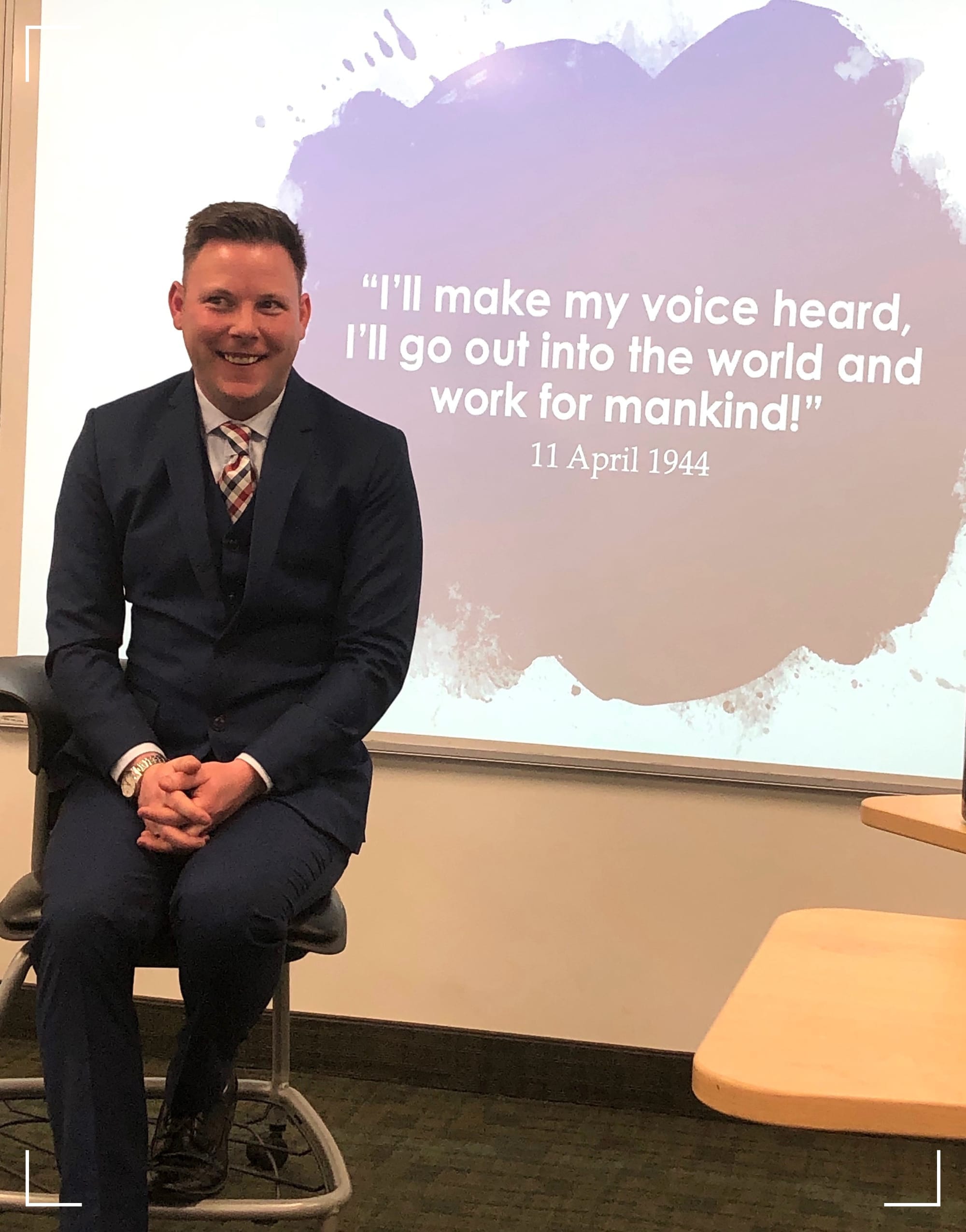
The same day was seven years to the day from my dissertation defense. And the week prior in 2019, I stood in the Anne Frank House in Amsterdam. In the annex. In the room where she wrote. There is a quote on the wall from her diary: 'I'll make my voice heard, I'll go out into the world and work for mankind!' — Anne Frank, diary entry, April 11, 1944
I was a queer kid from rural Kentucky who almost flunked out of college, standing in that room, about to defend a dissertation I was told in a dozen ambient ways I had no business writing. The quote landed in my body like something I had always known and never been permitted to say.
It still lands that way. In this political moment. In this particular spring. With fascism named and the interval at stake.
And then I did the thing anyway.
That's all any of us can do. Do the thing anyway. Name the feeling. Tend the conditions. Sign the permission slip.
See you on the playground. 🌾
P.S. The Licking River is still there. So are you. That's enough to start with.