
Merits and Myths of Rock Bottom
TL;DR: The myth that you have to “hit rock bottom” before you can change doesn’t just fail people struggling with addiction — it’s killing our democracy. Waiting for external catastrophe to authorize the change we already know we need is how individuals stay stuck and how societies collapse. As a war rages in Iran, Congress abdicates its constitutional role, and 65% of Americans report exhaustion, we’re watching the political version of rock bottom mythology play out in real time. The alternative isn’t waiting for someone else to confirm it’s an emergency. It’s Critical Possibility Thinking: choosing interior recognition over external catastrophe, refusing to diffuse responsibility, and asking who benefits from our not acting until it's too late.
I. The Bottom I Didn’t Hit
There’s a story we tell about change. It goes like this: you have to hit the bottom before you can climb. The crash has to happen. The arrest, the intervention, the morning where everything you’ve built is lying in pieces around you — that’s when you’ll finally be ready.
I didn’t hit that bottom.
I got sober without a DUI, without harming someone I loved on a drive I shouldn’t have taken, without a morning I couldn’t explain. My bottom was interior. It was the growing, unbearable distance between who I was and who alcohol was quietly, unremarkably, making me into. No spectacular rupture. No clear before-and-after moment anyone outside my own skull would have recognized as a crisis. Just: I could see the direction I was heading, and I chose not to go there.
That’s not a recovery story the culture has much room for. Rock bottom, as cultural mythology, requires evidence. It wants the wreckage visible from the outside.

But the clinical consensus has been moving away from this for years. Rock bottom is subjective — “one person may consider becoming homeless rock bottom, another may consider getting divorced to be their rock bottom — which makes the myth even less defined” (Recovery.com, 2025). What looks like a survivable low to one person is fatal to another. The cruel math: “someone’s rock bottom is sometimes six feet under — they get sicker and sicker and may even die before finding recovery if they continue to put off treatment” (Safe Harbor Recovery, 2025).
The myth of rock bottom kills people.
II. Rock Bottom Isn’t Only About Substances
The myth operates anywhere we’re waiting for an external catastrophe to authorize the change we already know we need.
It’s the student who stays in the wrong major, the wrong institution, the wrong program — accumulating debt and disconnection, performing adequacy in a container that was never built for them — waiting for the right time that never arrives. The bottom they’re waiting for is a decade of lost momentum.
It’s the professional job-hugging in a role that stopped fitting years ago. There’s a particular psychological toll to this — not dramatic, not acute, but corrosive. Identity erosion. The chronic low-grade despair of performing a version of yourself you no longer recognize. The question that sits underneath so much of modern work life: who needs me? The bottom they’re waiting for is a layoff or a breakdown — something external to finally make the decision for them, rather than the interior recognition that the fit is already broken, has been broken, and staying is the slow catastrophe.
It’s the relationship held past its life. The town you didn’t leave. The version of yourself you’re still performing for people who stopped watching.
In each case, the same structure. Waiting for the outside to confirm what the inside already knows.
III. What the Myth Gets Right — and Wrong
Crisis can clarify. When the structure of your life collapses, you sometimes see the load-bearing walls for the first time. The shock of external consequence can produce the interior recognition that, under better circumstances, you’d have arrived at through honest reflection. Some people need the flood to see the flood plain.
But here’s what the myth gets dangerously wrong: it treats the flood as the only teacher. It requires waiting. And — this is the part that belongs to power — the waiting is not a burden that falls equally.
Privilege is structural bottom-immunity. If you have resources, relationships, and social insulation, your consequences arrive later, softer, or not at all. A first DUI becomes an expensive inconvenience rather than a lost job. A pattern of behavior that would destroy someone without a safety net becomes a phase you move through. The bottom keeps getting raised for you by the cushions you’ve accumulated. Which means the people most likely to be forced into recognition by catastrophe are those who already had the least, and the people most likely to wait indefinitely are those who have the most to lose by seeing clearly.
IV. The Political Rock Bottom Myth
Now let’s go to the collective. Because I’ve been watching the same myth operate at the civic scale, and it is eating us alive.
The political version goes: when things get bad enough, people will wake up. The abuses will accumulate. The crisis will become so legible that the comfortable will finally act, the privileged will finally put skin in the game.
I no longer believe this. Waiting for political rock bottom is how democracies die.
Let me be specific about where we are, because abstraction is part of the problem.
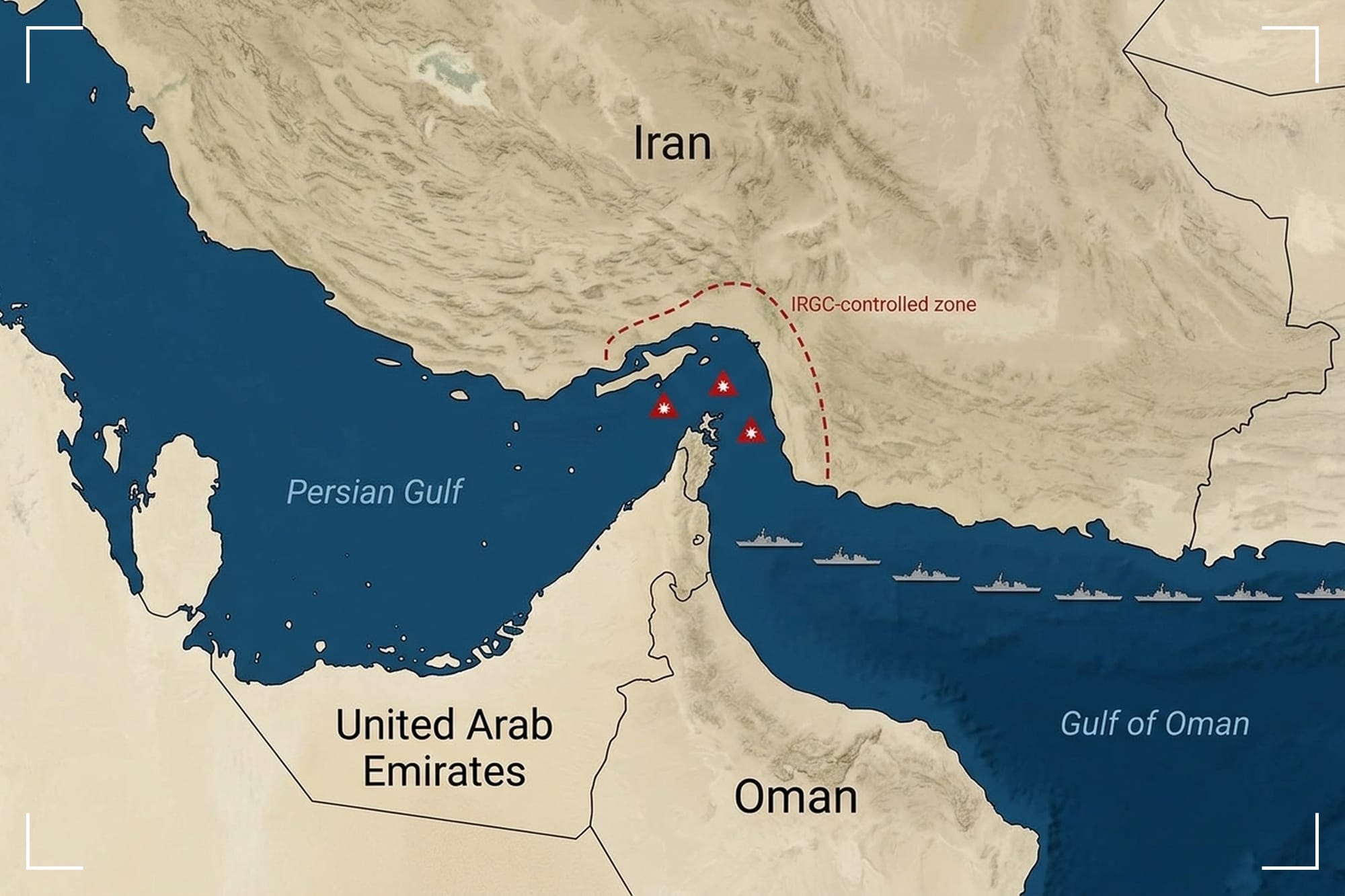
On February 28, 2026, the United States and Israel launched coordinated airstrikes on Iran — a war of choice, launched during active negotiations, without a declaration of Congress, assassinating Supreme Leader Ali Khamenei. Iran closed the Strait of Hormuz. Through that waterway passes “roughly 27% of the world's maritime trade in crude oil and petroleum products” and 20% of global LNG (Congressional Research Service, 2026). It has been largely blocked since.
Last night — April 15, 2026 — the Republican-led Senate voted 47-52 to block a war powers resolution for the fourth time (PBS NewsHour, 2026). “The fourth time this year that the Senate has voted to cede its war powers to the president in a conflict that Democrats say is illegal and unjustified” (PBS NewsHour, 2026). The War Powers Act 60-day deadline arrives approximately May 1. Congress has not authorized this war, has not declared it, and has now refused four times to even assert its authority to weigh in.
The official US military casualty count is 13 killed and 381 wounded as of April 8 (Military Times, 2026). But The Intercept’s independent investigation found the Pentagon is actively undercounting — at least one service member whose death was publicly acknowledged by a member of Congress in a memorial service doesn’t appear on official Pentagon casualty rolls. “The Pentagon did not reply to a request for comment on why [the service member] was missing from its casualty rolls” (The Intercept, 2026). The internal Defense Department databases contradict each other by 23%. “Almost 750 US troops have been wounded or killed in the Middle East since October 2023” — a figure the Pentagon won't acknowledge (The Intercept, 2026).
American corporate media has largely accepted the official numbers. International outlets, independent journalists, and organizations like The Intercept are filling the gaps — doing the work that a captured press corps cannot or will not do. This is not a conspiracy theory. It is a gap in the public record, documented by the reporters trying to close it.
More than 1,000 Iranian civilians have been killed, including nearly 170 Iranian schoolchildren (Center for American Progress, 2026). At least 212 children are dead in Iran, according to independent human rights counts. “As of early April, at least 15% of all casualties in Iran were under the age of 18” (Wikipedia / 2026 Iran War, citing HRANA).
The last oil tankers that transited the Strait before the blockade are arriving at their destinations this week. Which means the economic consequences we've been told are “temporary” are only beginning to land. “In March alone, prices rose 0.9% — the largest one-month increase in nearly four years. Gasoline jumped 21.2% in a single month” — described by economists as “the largest monthly jump in gas prices in six decades” (USRecessionNews / Warflation, 2026). Fertilizer prices are projected 15–20% higher through the first half of the year, with consequences for food prices extending into 2027 (Dallas Fed, 2026). The IMF has cut its global growth forecast. Goldman Sachs puts recession risk at 30%.
“A Financial Times investigation found that $580 million in bets on falling oil prices were placed just 15 minutes before Trump published a statement postponing attacks on Iran — raising calls for investigation of insider trading” (Wikipedia / Economic Impact of the 2026 Iran War).
The fossil fuel industry is posting record profits. Defense contractors are billing for the munitions. The traders who apparently knew something before the rest of us did are pocketing the difference.
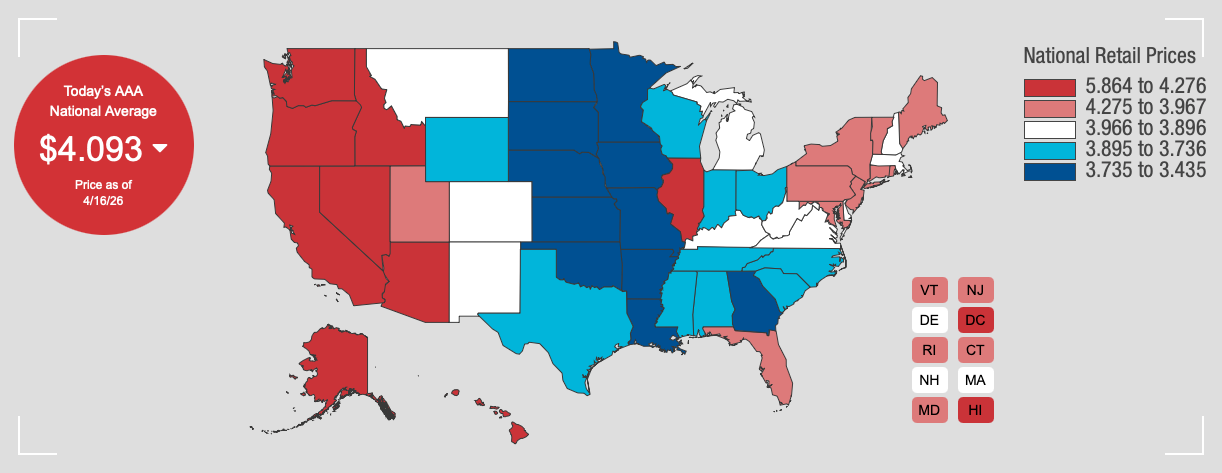
Working families are paying $4.10 a gallon. Farmers are watching input costs climb as a planting season that could drive food inflation into next year approaches. Service members and their families are absorbing a human cost the government is actively working to minimize in the official count.
Who is paying for this? And who isn’t?
V. The Bystander Effect — and the Poem
There is a concept in social psychology called the bystander effect. “The greater the number of bystanders, the less likely it is that any one of them will provide help to a person in distress” (Psychology Today). Diffusion of responsibility. Everyone assumes someone else will handle it. Everyone waits for someone else to confirm it’s an emergency. The smoke fills the room, and people sit still because no one else is getting up — and therefore it must not be that serious.
“Political disengagement, when due to perceived indifference in others, may also be seen as diffusion of political responsibility — the emergency at the individual level mirrors a political atmosphere in crisis at the national level” (Penn State Applied Social Psychology, citing Darley & Latané, 1968). We are doing this. Together. At scale.
Our elected officials — across party lines, with a handful of exceptions — are failing to rise to the moment. A war of choice launched without congressional authorization, producing a global energy shock and a regional humanitarian catastrophe, is being processed primarily as a news cycle. The institution designed to be a check on executive war power has voted four times to waive that check.
And then there is the poem.
Martin Niemöller was a German Lutheran pastor who initially supported the Nazi regime and was later imprisoned at Dachau. He spent the rest of his life trying to articulate what it cost him to wait:
First they came for the socialists, and I did not speak out — because I was not a socialist. Then they came for the trade unionists, and I did not speak out — because I was not a trade unionist. Then they came for the Jews, and I did not speak out — because I was not a Jew. Then they came for me — and there was no one left to speak for me.
Niemöller didn’t lack information. He lacked in-group urgency. The persecution happening around him registered as their problem — because they weren’t him, weren’t his people. He waited for his personal rock bottom. By the time it arrived, the capacity for collective response had been systematically dismantled.
This is Pillar 3 in the Deep Diversity framework — Tribes. Our brains are wired, below conscious deliberation, to weight the urgency of harm according to proximity to our in-group. That’s not bigotry. That’s neurobiology. But it is exploitable. And it is being exploited with extraordinary precision, right now, by people who are counting on our tribal sorting to keep us from asking who benefits.
VI. Drop the Red Hat
I want to say something that will probably irritate people across the political spectrum, which is exactly why it needs to be said.
The red hat is a tribal symbol. So is everything on the other side of the aisle that signals team affiliation before it signals thought – I write as my New Yorker tote and Pride desk flag are in clear view. These symbols are not innocent. They are the mechanism by which we organize our urgency — deciding whose suffering counts as an emergency and whose counts as their problem — before we’ve had a single conscious thought about it.
As long as the primary question I’m asking about you is which side you are on, I am not asking the more important question: who benefits from all of this?
Because it does not appear to be me. It does not appear to be most of the people I know. It does not appear to be the roughly 65% of Americans who, by most measures, are exhausted, anxious, and struggling to get through the week. The structures producing this — the accelerating concentration of wealth, the deliberate destabilization of institutions, the manufactured outrage cycling faster than any human being can metabolize — generate enormous returns for a very small number of people, and produce exhaustion, division, and learned helplessness for the rest.
Heather McGhee documented it as the drained pool: towns that filled their swimming pools with concrete rather than integrate them. Everyone lost the pool. The people who benefited were not in the pool. The tribal sorting is the concrete. It’s how we’re being organized to drain our own commons.
The team jerseys, red hats, and other symbols are load-bearing. They hold the whole system up. The moment enough people put them down and ask who’s running the concessions — that’s when something changes.
The question isn’t which side started it. The question is: who is paying for it?
VII. Critical Possibility Thinking — Going One Layer Deeper
This is what Critical Possibility Thinking (CPT) asks us to do. Not to abandon political analysis, but to go one layer deeper. To ask: what has been made to seem inevitable here that isn’t? What would I see if I looked at this structure rather than at my neighbor? Who is benefiting from my not asking that question?
CPT is the named counter to bystanderism. It is the practice of refusing to diffuse responsibility — refusing to wait for someone else to confirm it’s an emergency, refusing to require that the crisis reach your personal door before it registers as real. It is the interior recognition rather than the external catastrophe. Applied not just to your own life, but to the collective one we share.
CPT specifically asks about power: Who holds it? How does it move? Who it is not moving toward? Whose urgency is being manufactured, and whose is being suppressed? What narrative is being maintained by keeping us focused on each other rather than on the institutions and arrangements that produce our shared conditions?
These are not partisan questions. They are structural ones. And it is precisely these questions that tribal sorting is designed to prevent us from asking together.
VIII. We Are the Ones We've Been Waiting For
The way out of the political rock bottom myth is the same way I got sober.
Not waiting for the crash. Choosing the recognition instead. Feeling the distance between who you are and who the conditions are making you, before force arrives to settle the question. That is sovereign sobriety applied to civic life. And it is available to anyone willing to set down the jersey long enough to look clearly at the field.
“When one person takes action, others may be emboldened to follow” (Psychology Today). The upstander who says I can see what’s happening, and I am not going to wait for it to reach my door — that person breaks the diffusion of responsibility. They don't need to have it all figured out. They just need to stop waiting.
There’s a line that has been living in activist and organizing traditions for decades, most luminously attributed to June Jordan: “We are the ones we've been waiting for.”
It’s not a rallying cry. It’s a diagnosis.
We have been waiting for a leader. A moment. A bottom. Something external and unmistakable to finally authorize the response we already knew was needed. We have been standing in the smoke, watching each other not move, deciding that since no one else is alarmed, maybe we shouldn’t be either.
But we are the ones. There is no cavalry. The bottom some people are waiting for is the bottom others are already living — and have been living — and have been trying to tell us about for years.
Niemöller waited for his rock bottom. By the time it arrived, there was no one left to speak.
The question isn’t whether things are bad enough yet. The question is whether you're willing to see clearly now, while there’ s still someone standing next to you who could.
This is a Possibility Page — a public essay in the Creative Recess tradition of Manifestemoir: first-person biographical specificity that zooms out to structural argument. If this landed for you, the Playground tier is where we go deeper. And if you want to think through what Critical Possibility Thinking looks like in practice — in your school, your work, your life — that’s what we're here for.
Works Cited & Recommended Reading
Addiction Policy Forum. “The Myth of Waiting for Rock Bottom.” 2020. https://www.addictionpolicy.org/post/myth-of-waiting-for-rock-bottom
Center for American Progress. “The War in Iran Will Raise Fuel Prices and Costs Throughout the Economy.” March 2026. https://www.americanprogress.org/article/the-war-in-iran-will-raise-fuel-prices-and-costs-throughout-the-economy/
Choudhury, Shakil. Deep Diversity: A Compassionate, Scientific Approach to Achieving Racial Justice. Greystone Books, 2021. https://www.shakilchoudhury.com
CNBC. “Here Are All the Ways the Iran War Has Affected the U.S. Economy So Far.” April 15, 2026. https://www.cnbc.com/2026/04/15/here-are-all-the-ways-the-iran-war-has-affected-the-us-economy-so-far.html
CNBC. “U.S. Says Hormuz Blockade ‘Fully Implemented.’” April 15, 2026. https://www.cnbc.com/2026/04/15/us-strait-of-hormuz-blockade-navy-iran-seaborne-trade-oil-trump.html
Congressional Research Service. “Iran Conflict and the Strait of Hormuz: Impacts on Oil, Gas, and Other Commodities.” March 11, 2026. https://www.congress.gov/crs-product/R45281
Dallas Fed. “What the Closure of the Strait of Hormuz Means for the Global Economy.” March 20, 2026. https://www.dallasfed.org/research/economics/2026/0320
Dallas Fed. “The Impact of the 2026 Iran War on U.S. Inflation.” April 2026. https://www.dallasfed.org/~/media/documents/research/papers/2026/wp2609.pdf
Darley, J.M. & Latané, B. “Bystander Intervention in Emergencies: Diffusion of Responsibility.” Journal of Personality and Social Psychology, 1968.
Drugabuse.com. “The ‘Hitting Rock Bottom’ Myth.” 2025. https://drugabuse.com/addiction/rock-bottom-myth/
The Intercept. “We Called Out the Pentagon for Undercounting U.S. Casualties in Iran. They Keep Doing It.” April 8, 2026. https://theintercept.com/2026/04/08/us-military-casualties-wounded-iran-war/
The Intercept. “The ‘Casualty Cover-Up’ Amid Trump's Wars in the Middle East.” April 1, 2026. https://theintercept.com/2026/04/01/iran-war-us-casualty-numbers-trump-hegseth/
McGhee, Heather. The Sum of Us: What Racism Costs Everyone and How We Can Prosper Together. One World, 2021.
Military Times. “13 US Troops Killed, More Than 380 Wounded in Operation Epic Fury.” April 8, 2026. https://www.militarytimes.com/news/your-military/2026/04/08/pentagon-data-13-us-troops-killed-346-wounded-in-operation-epic-fury/
NBC News. “Senate Republicans Again Block Democratic Effort to End Trump's Iran War.” April 15, 2026. https://www.nbcnews.com/politics/congress/senate-republicans-block-democratic-effort-end-trumps-iran-war-rcna331819
PBS NewsHour. “Senate Republicans Again Reject Resolution to Rein in Trump's Iran War.” April 15, 2026. https://www.pbs.org/newshour/politics/watch-live-senate-republicans-again-reject-resolution-to-rein-in-trumps-iran-war
Penn State Applied Social Psychology. “The Bystander Effect: An Ongoing Challenge.” November 2024. https://sites.psu.edu/aspsy/2024/11/05/the-bystander-effect-an-ongoing-challenge/
Psychology Today. “Bystander Effect.” https://www.psychologytoday.com/us/basics/bystander-effect
Recovery.com. “Debunking the Rock Bottom Myth: A New Perspective on Addiction Recovery.” September 2025. https://recovery.com/resources/debunking-the-rock-bottom-myth/
Safe Harbor Recovery. “Understanding ‘Rock Bottom’ and Supporting Recovery.” 2025. https://safeharborrecovery.com/blog/the-deadly-myth-of-rock-bottom/
TIME. “Senate Blocks Iran War Powers Resolution for Fourth Time.” April 15, 2026. https://time.com/article/2026/04/15/senate-blocks-iran-war-powers-resolution-for-fourth-time/
USRecessionNews. “Warflation 2026: Why the Iran War Is Driving Prices Higher.” April 2026. https://usrecessionnews.com/warflation/
Wikipedia. “2026 Iran War.” Updated continuously. https://en.wikipedia.org/wiki/2026_Iran_war
Wikipedia. “Economic Impact of the 2026 Iran War.” Updated continuously. https://en.wikipedia.org/wiki/Economic_impact_of_the_2026_Iran_war
Wikipedia. “2026 Strait of Hormuz Crisis.” Updated continuously. https://en.wikipedia.org/wiki/2026_Strait_of_Hormuz_crisis