
This Is Not a Drill
TL;DR: Hungary just proved that 16 years of authoritarian consolidation can be reversed in a single election — if enough people show up. The 2026 midterms are the closest thing the US has to that moment. The House needs three seats to flip. The Senate is a four-seat swing. The constitutional architecture is live. And 65% of Americans are too exhausted to engage with any of it.
Ace the Midterms, our inaugural civic recess offering, is a civic learning community — three cohorts, May through October, open enrollment, live and recorded — that makes the map legible and the practice sustainable. Non-partisan in method. Not neutral in analysis. Two ways in: one cohort ($85) or all three + facilitator guide ($195). Registration open now. First content drops May 1.
Urgent local note: Kentucky's voter registration deadline for the May 19 primary is this Monday, April 20 at 4pm.
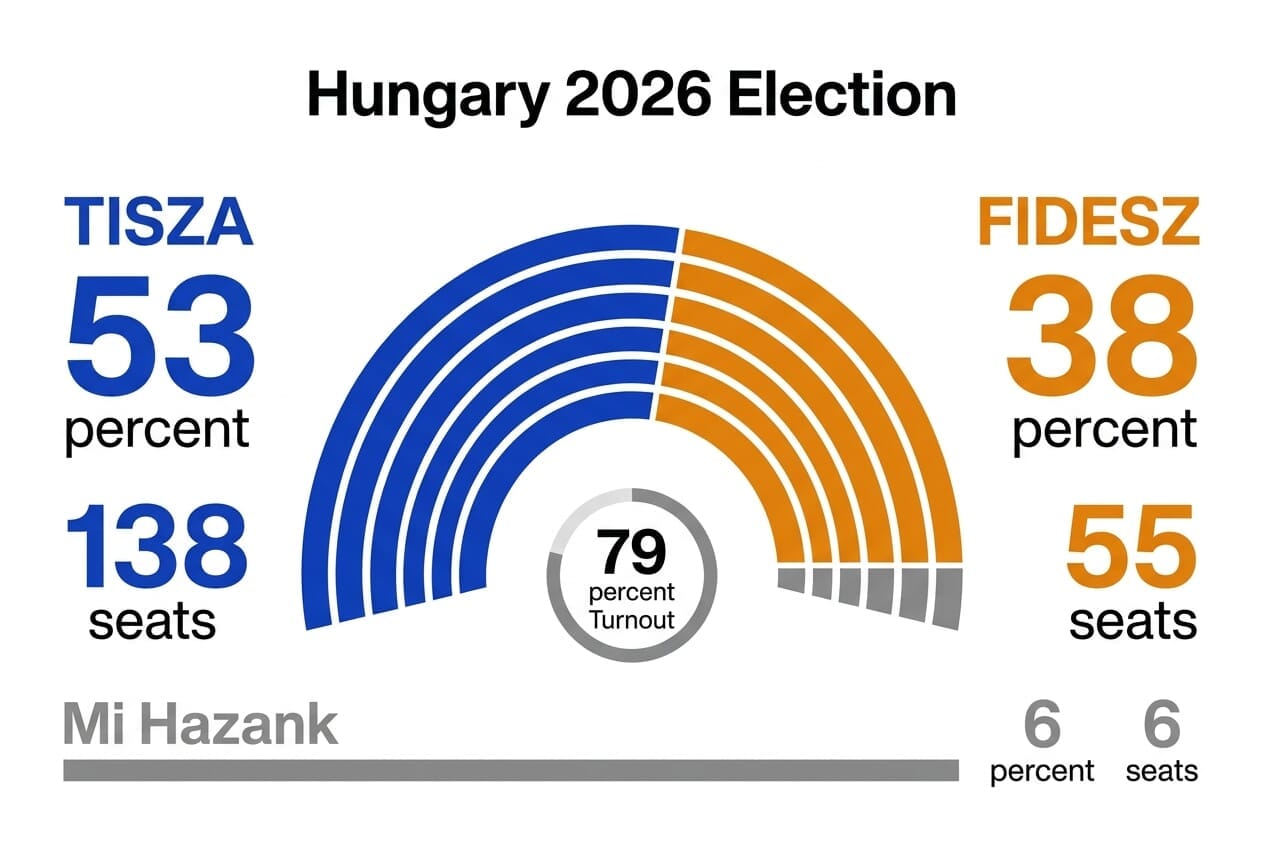
On Sunday night, Viktor Orbán conceded defeat in Hungary after 16 years in power.
Orbán is the man American conservatives called a genius. The man JD Vance flew to Budapest to prop up four days before the election. The man who rewrote the constitution, captured the courts, strangled the free press, and then won four elections in a row while doing it. The man who kept telling the global far right: this is how you hold power forever.
Seventy-nine percent of Hungarians voted. His party lost more than half its seats.
"Together we replaced the Orbán regime," said Péter Magyar, addressing tens of thousands of supporters along the Danube. "We took our country back."
That's not a European story. That's a proof of concept.
Not Neutral. Not Both Sides.
Here's what I need to say plainly, and I'm going to say it:
The United States has two major political parties. Both have taken enormous amounts of corporate money. Both have made serious mistakes. Neither is clean.
But only one of them has spent the last decade systematically undermining the conditions under which democracy can function — attacking the independence of the judiciary, delegitimizing elections they lose, concentrating power in the executive, suppressing voter participation, and using the machinery of government to punish political opponents.
That's not a partisan observation. It's what the V-Dem Institute found when they measured it. As of December 31, 2025, the United States no longer meets the threshold for classification as a liberal democracy. The index has been tracking since 1789. This is the first time we've fallen below the line.
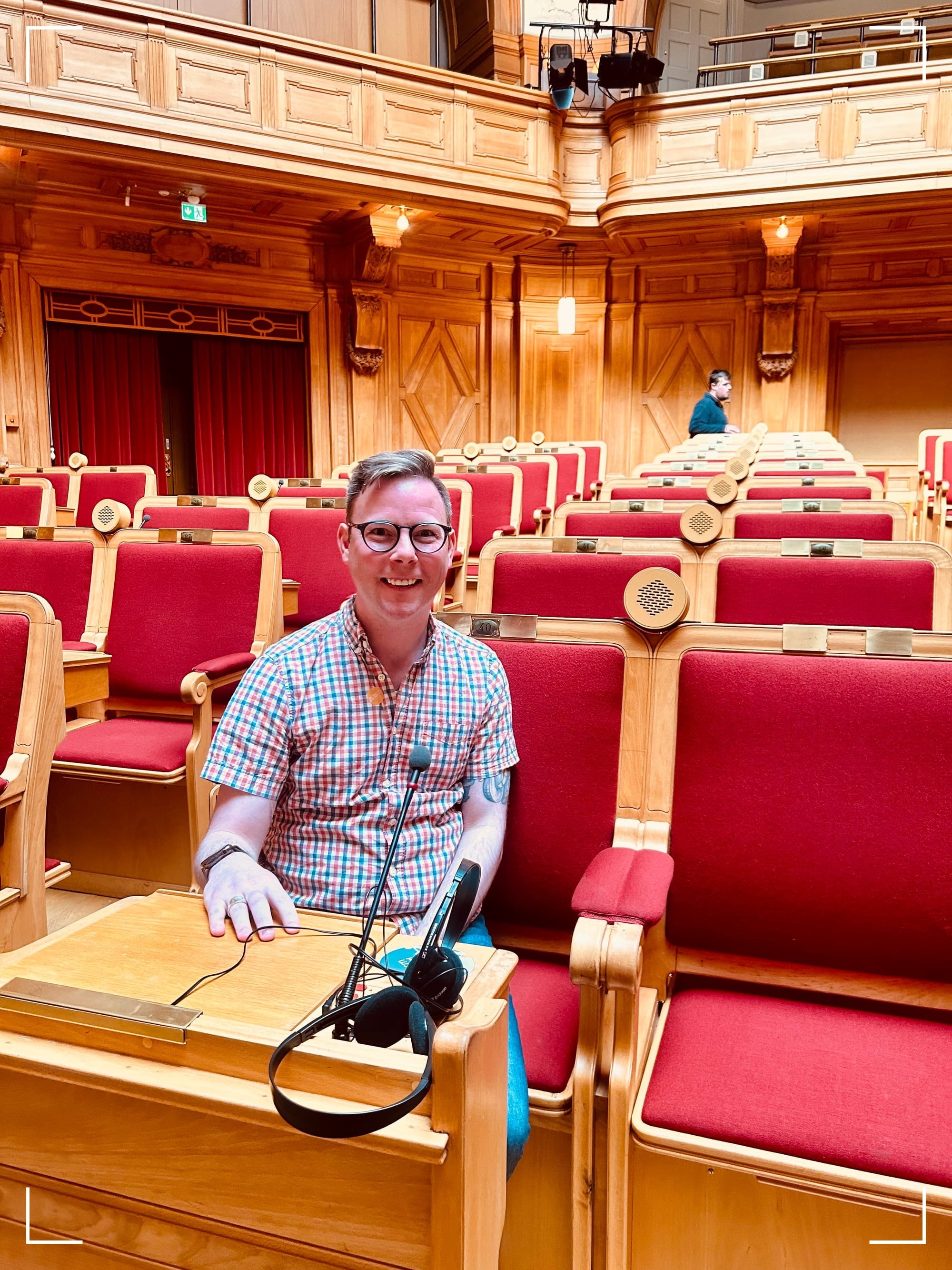
I am politically unhoused. I'm anti-corporate-backed candidates of any stripe. I think both parties helped build the binary that is currently eating us alive. I have sat in Sweden's parliament and felt in my body what coalition democracy makes possible and what we are throwing away.
But I am not neutral. Neutrality is not available. Both-sidesing this moment is not analysis — it's abdication. One side is striving toward liberal democracy. One side is trending toward illiberal democracy. Those are not equivalent directions.
2026 is not about getting your preferred policies enacted. It's about keeping the door open for future arguments about policy. It's about whether We the People still have a functional mechanism for holding power accountable — or whether that mechanism gets quietly closed off, one redistricting map and one captured court and one gutted election office at a time, until the door is gone and you're standing outside it.
This might not be the last meaningful election. But the people who want it to be are counting on your exhaustion. Losing 2026 doesn't end democracy. It just hands the people who want to end it the keys — and the time to change the locks.
The Architecture of Exclusion
Here's what makes this harder: even the people who want to participate often can't — not in any meaningful way — because the architecture of participation has been quietly rigged.
In Kentucky, the primary is the election for most races. It's a closed primary state, which means you have to register as a Republican or Democrat to vote in the primary that actually decides most contests. The deadline to register for the May 19 primary is this Monday, April 20, at 4:00 p.m.
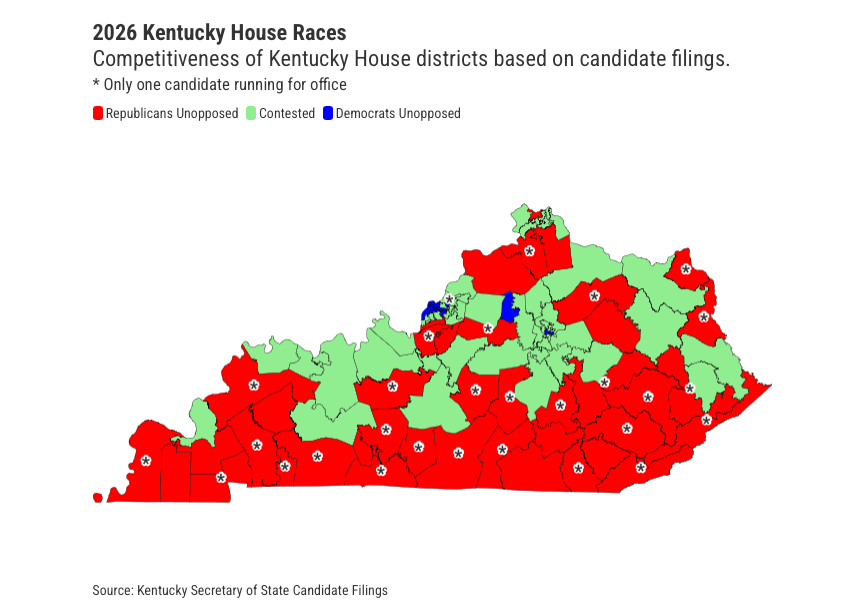
The primary is where the decision gets made. More than half the state legislative candidates on the 2026 ballot are poised to run uncontested in November. In 2024, just 12.7% of registered Kentucky voters cast ballots in the primary — the election in which most of these races were actually decided. Politicians should not get to pick their voters. But they do, unless people register, show up, and understand what they're actually deciding.
California runs what looks like the opposite — an open "jungle primary" where all candidates appear on one ballot and the top two advance regardless of party. It sounds more democratic. In practice, it produces its own distortions: when one party runs a disciplined two-person field while the other runs eight serious candidates through the same funnel, the math does the rest. The Democratic governor's race already features Katie Porter, Tom Steyer, Xavier Becerra, Antonio Villaraigosa, and others — all competing for two spots in a system that doesn't reward consensus-building, only survival. Meanwhile, California Republicans have consolidated to two candidates who could end up on the November ballot together. Who advances may have less to do with what California voters want than with who had the money and party infrastructure to survive the scrum.
Then there's the category of states where neither primary produces anything resembling your first or second choice — because the districts were drawn to guarantee a predetermined outcome, and the candidates who survive are the ones who most faithfully represent the interests of whoever drew the map.
The result, nationally: a governing class that is increasingly self-selected, financially captured, and insulated from accountability. The ratio of electeds choosing their voters to voters choosing their electeds is getting worse, not better. And the possibility — the actual structural possibility — is in electing people who will fix that. Candidates who will expand the franchise, unrig the maps, restore competitive elections, and accept that governing requires being answerable to the governed.
That's not a partisan ask. It's a democratic one. And it's a lot harder to do if you don't know what you're looking at.
The Stakes Right Now
So, thirty-five days from now, Kentucky holds its primary. For the first time in my adult life, Kentucky's Senate seat is open. Mitch McConnell — who held it longer than I've been alive — is finally retiring. A small crowd of Republican candidates is competing to be his most Trump-aligned successor. And on the Democratic side, the field is the most competitive it's been in years.
Charles Booker — the progressive Louisville native who came within two points of the Democratic nomination in 2020 and lost to Rand Paul in 2022 — is back. His internal polling shows him within seven points of the Republican frontrunner. That's not a foregone conclusion. That's a race. Other recognizable Democratic primary contenders include Amy McGrath and Kentucky House Democratic Floor Leader Pamela Stevenson.
"Kentucky is ready to turn the page — and show the world what loving your neighbor looks like."
Kentucky's own Andy Beshear — twice-elected governor in a state Trump won by 30 points, now chair of the Democratic Governors Association, and already a name circulating for 2028 — knows something about winning here. What he'd tell you: it starts with showing up in the primary.
Nationally, as of April 13, prediction markets are pricing an 85% chance that Democrats flip the House. My own representative, Thomas Massie, has broken with the President on several fronts — which tells you something about how strange this moment is even within the Republican Party.
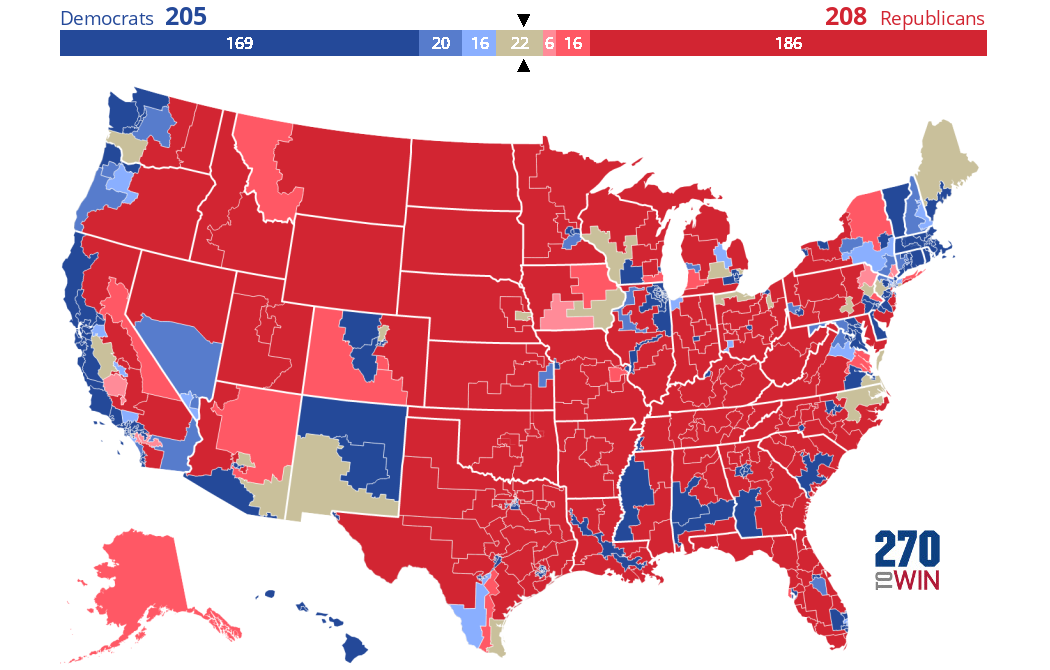
The Senate is a four-seat swing. Two special elections — for the seats vacated by Marco Rubio and JD Vance — are running simultaneously with the general. If the House flips, the Speaker is third in line to the presidency. The constitutional architecture is live in ways it hasn't been in a generation.
And 65% of Americans say they feel exhausted when they think about politics.
That's the trap. The people who need to show up are the ones who've been ground into exhaustion by a system that was designed — partly by design, partly by neglect — to make participation feel impossible. More information doesn't fix that. More outrage definitely doesn't fix that. What fixes it is legibility. A container. A practice. People who can read the map and explain it to someone else.
That's what I'm building.
Ace the Midterms
A civic intelligence project from Creative Recess.
Non-partisan in method. Not neutral in analysis. Nationally relevant, authentically local.
Starting May 1, I'm running a structured civic learning community through the 2026 primary season and into November. We'll read actual bill text. Pull actual campaign finance filings. Track the specific races on the specific ballots that are structurally consequential. No outrage. No doom-scrolling repackaged as content. Just: here is how power works. Here is how to read it. Here is how to act in it with agency — in your county, on your ballot, in your community.
Wherever you are on the map, your ballot is the live case study.
Three cohorts. Open enrollment. No cap on participation. Weekly sessions — live and recorded, so you can join now or join in August and catch up from wherever you are.
Reading what the May primaries just told us. Kentucky (May 19), Georgia (May 19), Oregon (May 19), Pennsylvania (May 19), California (June 2), Maine (June 9), New York (June 23) all close during or just before this cohort. Whatever just happened in your state is live material. Your county as the practice.
The structural depth session — before the August primary wave arrives. We build the framework first, then watch Michigan, Arizona, Kansas, Tennessee, Wisconsin, Minnesota, and Connecticut close in weeks 3 and 4. Michigan's Senate primary may determine Senate control. Wisconsin's governor race will shape the 2030 redistricting cycle. Whatever's on your state's August ballot becomes the live case study.
All 50 states' primaries are done by September 15. Every nominee is known. Ballots are being finalized. Mail voting is opening across the country — Colorado, Oregon, Washington, Nevada automatically mail every registered voter a ballot. Four weeks to go into November ready — not just informed, but practiced. Session 4 is explicitly about bringing someone else with you.
Two ways in
Apply your $85 toward annual Playground membership ($120) at any time — pay $35 more, keep the practice year-round.
Apply your $195 toward annual Studio membership ($300) at any time — pay $105 more, stay in the community beyond November.
Existing Playground members: add a single cohort for $65. Studio and Field members: you're already in. Sliding scale available — reach out.
The Proof of Concept
The Hungary result didn't happen because the opposition got their messaging right. It happened because enough people decided that the conditions for their own future were worth showing up to defend. Seventy-nine percent turnout. The highest since the fall of communism.
We don't have to wait for our version of that moment. We can start building toward it right now, thirty-five days before the first primary, with the tools and the community and the practice that makes showing up feel like something more than shouting into a void.
If this post landed for you — please Play it Forward. Text it. Post it. The people who need to be in this room are the ones who've already checked out. You probably know some of them. Quick link to share: https://bit.ly/AceTheMidterms
Hungary showed up. Now it's our turn.