
It's Always in Motion
I moved home to Kentucky in July of last year. Fourteen months, which is long enough that people have stopped asking how long I'm staying.
If you've been on this list since the beginning, you signed up for something I described as a practice ecology — a space to pause, play, and practice possibility. That's still true. But I've spent a year doing things I didn't plan on, in a county just shy of 15,000 people, and I've learned enough that it's worth telling you plainly what this is now.
So: a re-introduction. Including the parts that aren't flattering.
The FUNemployment year
I left term faculty at Iowa State in January 2025. Not a layoff, not a scandal — a decision, made with a clear head, that the container had stopped fitting. I had a Ph.D., a good teaching record, and a growing certainty that I was spending my one life optimizing a system I no longer believed in.
Here is what nobody tells you about leaving: the hardest part isn't money. It's that you lose the sentence. You know the one — the one you say at parties, the one that goes I'm a professor at and then a place, and everyone nods and the conversation moves on. Without it, you are just a person in a room, explaining yourself.
 KP Williams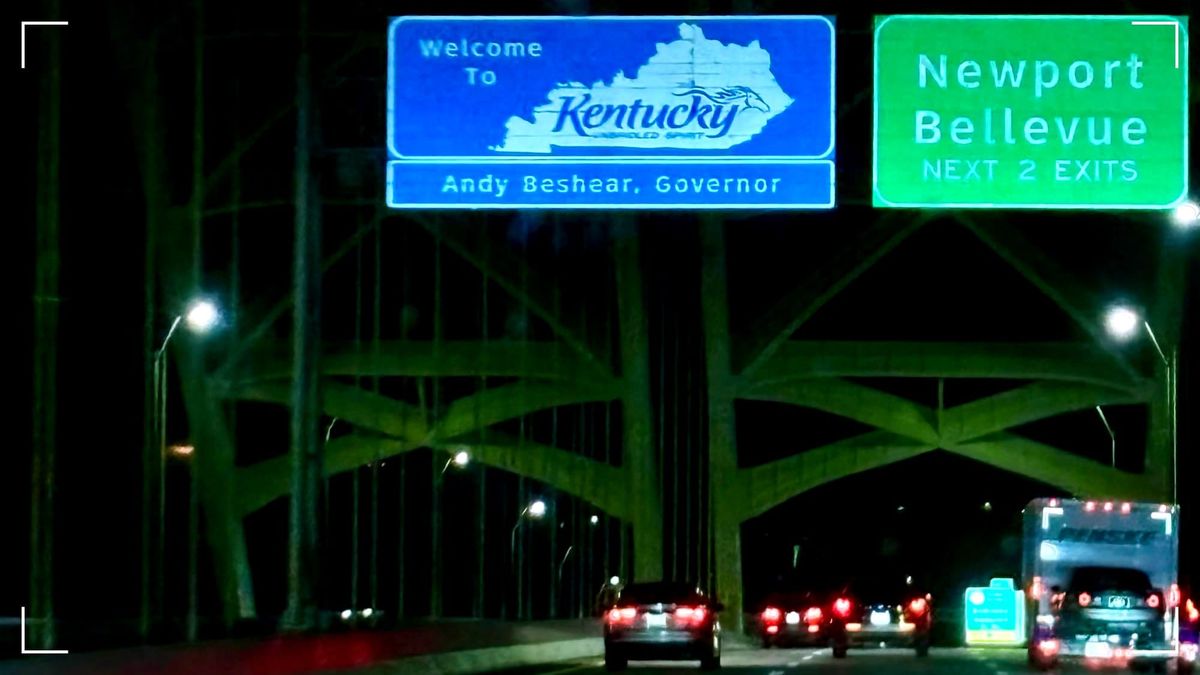
I've been explaining myself for fourteen months. I call it FUNemployment because the alternative is calling it something worse, and because it has, in fact, been more interesting than the last three years of my faculty life.
My dissertation was called On the Move. I wrote it about how millennial gay men story their own becoming — how identity gets built in transit rather than arrived at. I did not appreciate at the time that I was describing a method I'd be using on myself for the next decade, or that the moving would eventually point back the direction it came from.
What I actually do now: I shelve books and check out patrons part-time at the public library. I've just joined the substitute teacher pool for the county schools. I sit on the board of a community theatre and I'm playing Rooster in Annie this December. I volunteer with tourism. I serve as a precinct officer and I show up to community forums. I run Creative Recess.
None of that is a career. All of it is the work.
The job I didn't get
In August the library posted a full-time position — circulation and marketing combined into one role. I applied. I wanted it more than I let on to most people.
I built a campaign on spec for the interview: a full September library card sign-up push, nineteen pages of design, captions, alt text, a companion newsletter, the whole thing mapped to the library's own colors and mission language. It was good work. I enjoyed making it more than I've enjoyed making anything in a while.
I didn't get it. I found out today.


September is Library Card Sign-Up Month | American Library Association
I'm telling you this for a specific reason. I teach a pedagogy that treats failure as formative rather than final — that says the thing which makes a setback survivable is that it happens inside a relationship rather than at the end of one. It would be cowardly to hold that position publicly and then only report the months that went my way.
So here's what it actually looks like in practice. I was on schedule. I went in. I shelved books and checked out patrons and helped somebody find new titles, in the building I had just spent a month imagining running differently. The people who made the decision were there. They will be there Thursday too.
That's the part I want to underline, because it's the whole argument of this newsletter in miniature. In a place this size you do not get to storm off. There is no other library. There is no other theatre, no other county, no other Thursday. The exit that a city offers — go be angry somewhere else, find a different scene — isn't available here.
Which means you have to develop an actual capacity: the ability to lose to people you'll see again, and keep being useful anyway. Not gracefully, necessarily. Just durably.
I don't think that's a small-town skill. I think it's the civic skill, and small towns just make it impossible to fake.
What a year of institutional life taught me
I came home with a theory about leadership. I've spent the year having it tested by minute books.
Some of what I've been doing, in no particular order: reconstructing a quarter century of a community theatre's finances. Reading every set of board minutes since the eighties. Building a volunteer system for a free October festival. Tracing sixty-five schoolhouses that operated in this county between the 1910s and consolidation, and discovering that the eight educational divisions mapped precisely onto the eight magisterial precincts — that the school system was, structurally, the county's political geography wearing a different hat.
I found a line item in the Kentucky Governor's budget that funded this theatre for years and then stopped, and there is no discussion of its loss in any set of minutes. It simply isn't there. Nobody wrote down that the money went away.
That absence is the most instructive thing I found all year.
But before anyone reads this as an indictment of one organization, let me be clear about where I'm standing. I have been on every side of this.
As an undergraduate I sat on the board of Kentucky Child Now, and I watched that organization dissolve. During the pandemic I chaired the board of the Community Development Society — a national organization, professionalized, full of people who study this — and I can tell you that being the group with the most expertise about community development does not inoculate you against the same failures. I'm on the board of The New Neighbor Project now, trying to be useful to a friend as she builds something from very little.
Every one of those organizations is or was staffed by serious, competent, well-intentioned people. Not one of them was immune.
Institutions don't usually fail loudly. They fail by not writing things down, by not having an owner for a decision, by having the same conversation five times across fifteen years without ever producing a document. I've now watched five separate attempts to revise one set of bylaws collapse in exactly the same way: no document, no owner, no date. Five times. Different people, different decades, identical failure.
There is nobody to blame in that pattern, which is exactly what makes it worth naming. A national society of experts and a volunteer theatre board in a town of two thousand are running the same operating system, and both of them are being asked to metabolize change faster than any group of humans can actually deliberate. No organization is less exposed to that than another. Some just have better staffing and a longer runway before it shows.
You cannot fix it with a leadership framework. You fix it with a calendar and a filing system and somebody willing to be boring in public.
 KP Williams
I was going to end that section there. Then, on Monday, the Falmouth Outlook suspended operations.
One hundred nineteen years — founded 1907. The Bracken County News went the same day, at ninety-nine. The announcement named eleven people losing work, down to whoever cleans the building, which tells you it was written as a company and not as a masthead. Rising costs, unpaid bills. No villain in it, which is the point I had just finished making and did not expect to have demonstrated inside of a day.
Understand what that is. Every finding I described above came out of a record: minutes, ledgers, a budget line, a school directory. The paper is the record for everything the minutes don't cover — who died, who married, who won, what the fiscal court did on a Tuesday in 1974. Somebody sitting down in 2050 to do the work I've been doing this year will find that the county goes quiet in 2026.
I've spent months scanning the Outlook into a digital archive, working backward from this year. On Sunday that was a research project. Today it's the only copy anybody's making.
Which is a strange way to arrive at the thing I actually wanted to write about.
Community literacy, and the trouble with turf
Here's the thing I most want to say this month.
In a small county, every organization is drawing from the same few hundred people. The theatre, the library, the extension office, the schools, the fair board, the churches, the tourism commission, the historical society. Same volunteers. Same donors. Same Tuesday nights.
When money is tight — and it is always tight — organizations start behaving as though those people are a fixed resource to be defended. So we schedule against each other. We don't share mailing lists. We treat another group's good year as a threat to our own. Turf gets guarded, quietly and politely, by people who would be genuinely offended to hear it described that way.
But participation isn't fixed. It's generative. The person who volunteers at the festival becomes more likely to join a board, not less. Showing up is a habit, and habits compound. Guarding your turf shrinks the exact thing you're trying to protect.
 Elisa Shearer and Luxuan Wang and Katerina Eva Matsa and Michael Lipka and Benjamin Toff and Kirsten Eddy
What's actually scarce in a place like this isn't money or people. It's coordination and interval — the shared calendar nobody keeps, and the reflective pause nobody schedules. Those are cheap. We just don't build them.
I've started calling the alternative community literacy: the capacity to read your own community as a system. Who's connected to whom. Where the redundancies are. Which institution is quietly holding knowledge that exists nowhere else. What each organization thinks it's competing for, and whether that thing is real.
Most places have plenty of civic participation and very little civic literacy. We show up. We don't read the room we're showing up in.
Putnam has been warning us since the nineties that we'd stopped showing up at all — that we were bowling alone. We are, still; that problem never got solved, it just got old enough that people quit citing it. But I'd add a second one alongside his. The people who do still show up often can't read the system they're standing in. A room can be full and illegible at the same time. Rebuilding the league doesn't help much if nobody in it knows who keeps the scorecard.
That's the connective tissue I keep coming back to — the reason school, work, and life aren't three separate subjects to me. They're the same question about whether people can encounter each other under conditions designed to prevent it. Mycelial, if you want the metaphor: mostly invisible, connecting without announcing itself, visible only when the system is stressed.
We are, at present, quite stressed.
What's changing here
Some honesty about this newsletter.
I built Creative Recess with a full architecture — tiers, containers, frameworks, a well-considered vocabulary. Earlier this year I published a civic education project called Ace the Midterms that I still think was well designed. Almost nobody engaged with it.
 KP Williams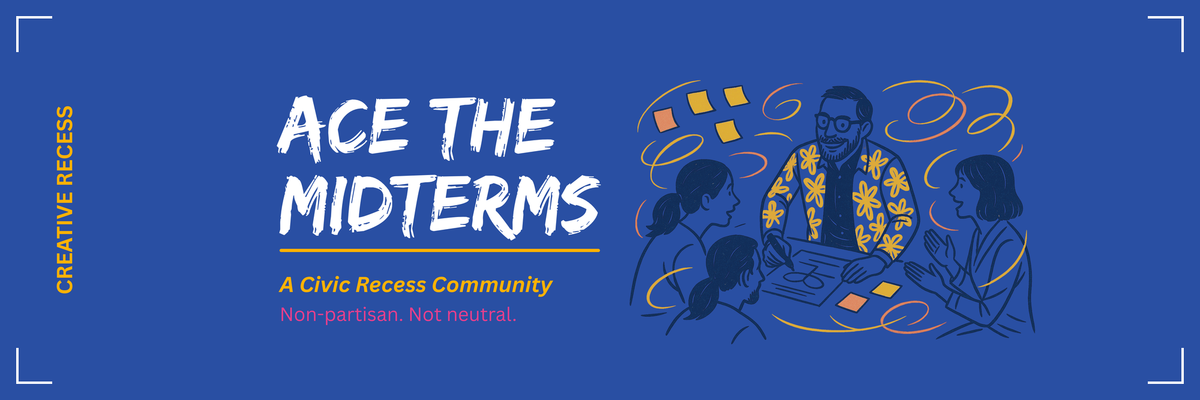
For a while I read that as a problem with the offering. I've come around to thinking it was a distribution problem, and a language problem. I was writing in a register that means a great deal to people already inside it and very little to a stranger — say, a board president somewhere at eleven at night, searching for why her bylaws revision died for the fourth time. She would find this work useful. She cannot currently find it at all.
So the shift, starting now: fewer frameworks, more field notes. I'm going to write what I'm actually finding, in plain language, with the artifacts attached — governance memos, retreat designs, the research itself. The philosophy doesn't go anywhere. It stops being the front door.
The membership tiers stay as they are. What changes is what flows through them: more of the actual working documents, some open to everyone, some held for members. If you've been on the free list wondering what the paid side is for, that's the honest answer — it's for the tools, not for extra opinions.
If you came here for the theory, it's still underneath everything. You'll just have to trip over it on your way in, which is honestly how it should have worked from the start.
Try this
Draw your community as a network — not an org chart, a network. Put every organization you can think of on a page. Then draw a line between any two that share a board member, a volunteer, a building, or a funder.
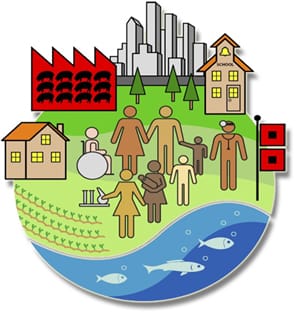
Look at what you've made. Find the organization with the most lines running through it; that's your actual civic infrastructure, regardless of what anyone's letterhead says. Then find the one with the fewest. Ask why.
It takes about twenty minutes and it will change how you read the next meeting you sit in.
I gave this newsletter its name because I think it's true twice.
It's always in motion — nothing is finished. No container is final, you're allowed to leave the thing that stopped fitting, and you do not have to be complete in order to be underway. Freire called that unfinishedness, and meant it as the ground of becoming rather than a defect. That's the hopeful reading, and I mean it.
It's also always in motion — nothing holds. One hundred nineteen years of a newspaper ends on a Monday. The tiredness you're carrying is not a personal failure of stamina. That's impermanence, and I mean that one too.
I've kept those two words paired for a long time without being able to say precisely why. This week made it plain. They aren't opposites, and neither is a consolation for the other. Unfinishedness without impermanence is just procrastination. Impermanence without unfinishedness is just loss. Held together they read more like a working instruction: build anyway, keep the record, don't expect either to last.
Both are the same sentence. Which one you hear probably depends on the week you're having.
In possibility,
KP
One ask, and it's the same one this essay just spent two thousand words making. If any of the above described a room you have actually sat in, send it to one other person who has sat in that room — a board member, a director, whoever keeps the minutes nobody reads. This work travels by recognition or it doesn't travel at all. Nothing is carrying it but you.
And if you are that person, and this landed in your inbox from a friend: the free list is below. It's where the field notes show up first.