
The Good Seats
The Seating Chart · Part III of III: Those placed to act
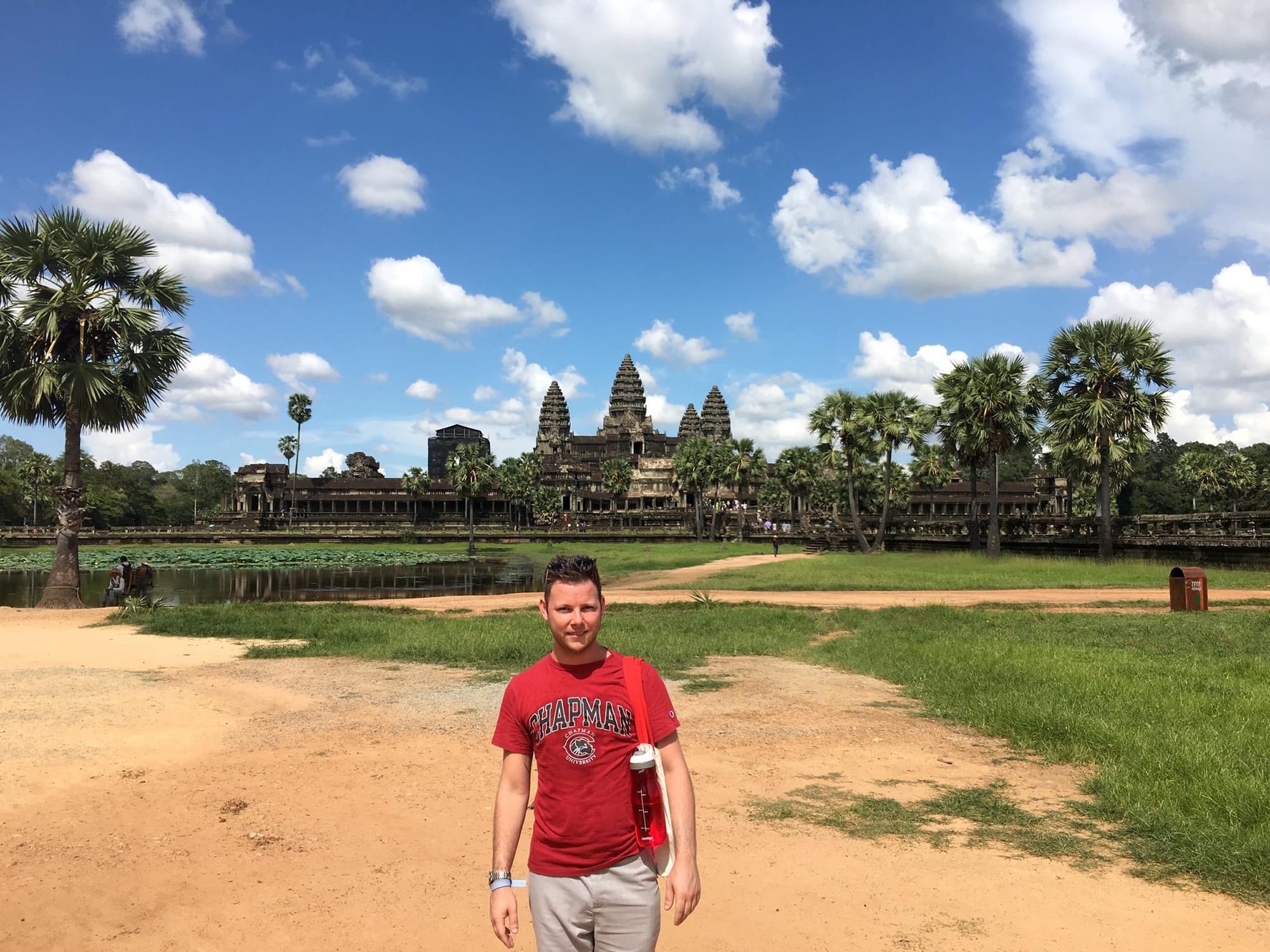
In July 2016, I rode a tour bus through Cambodia as part of my first study-abroad program. I traveled throughout Siem Reap and the surrounding rural countryside with fellow graduate students from Chapman's Attallah College of Education, studying education in international contexts. We were fortunate to visit nine NGOs in seven days and learned more about their community development, leadership, and education initiatives.
We saw what visitors see, including the stark contrast between their urban and rural places. The city bustles with tuk-tuks zipping between pedestrians and markets full of produce and wares, and locals ready to negotiate with tourists. Meanwhile, the countryside features homes on stilts near open latrines and the occasional grazing livestock. The floating villages operate on their own seasonal cycles (ten years on, I can't help but wonder about how climate chaos is impacting developing places like Cambodia).
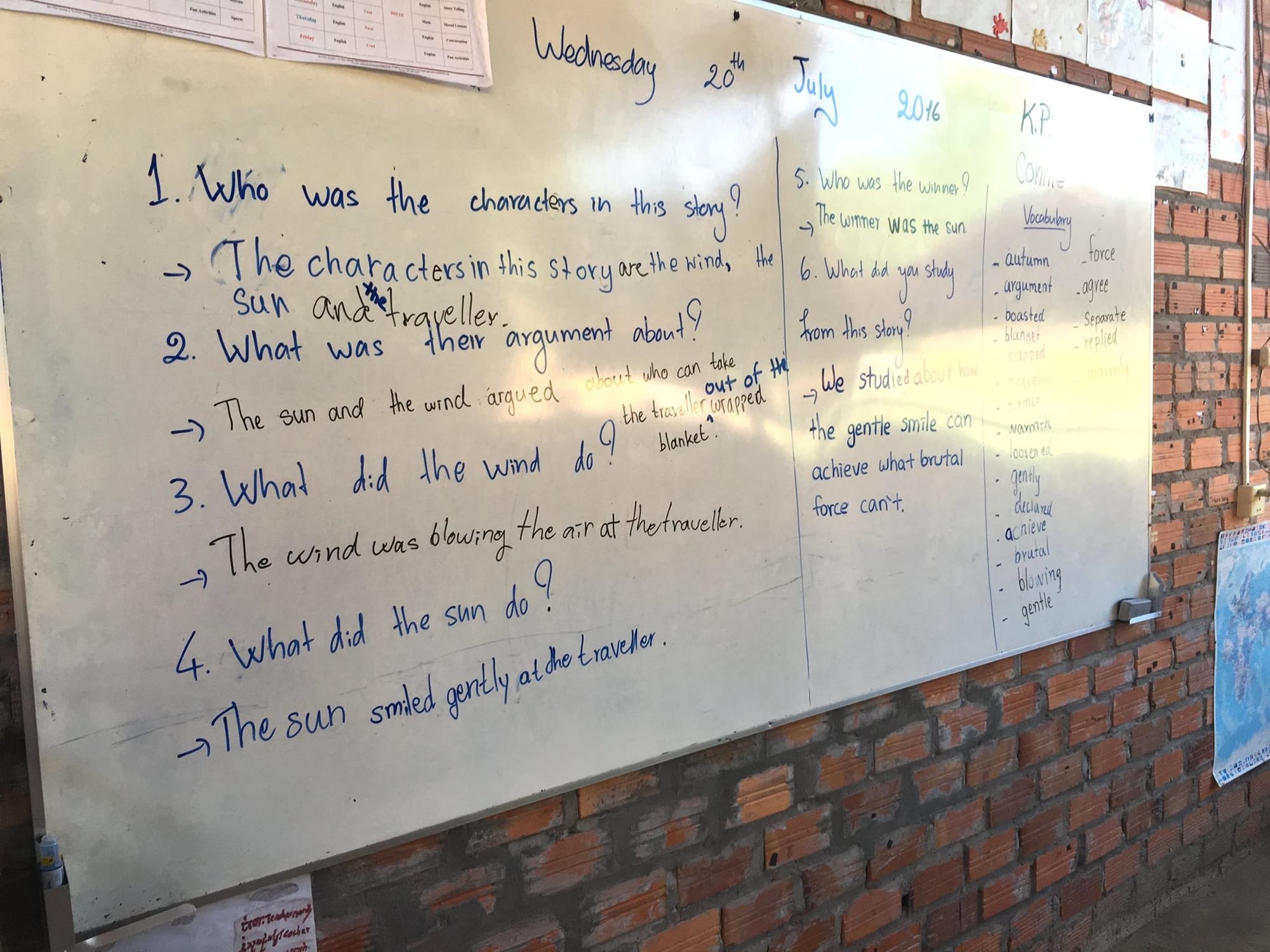
On a Wednesday, we sat in on an English lesson. On the whiteboard was Aesop's "The North Wind and the Sun," the fable in which the wind blows at a traveller and fails, and the sun simply warms him until he takes off his coat. The school was incredible: multiple grades in one open-air room, and energetic kids who were very intrigued by my tattoos. As I recall, it was among the better-resourced schools we saw.
I've spent two posts on other people's seats: the crowd that cheers, and the onlooker who explains. This one is about mine. On that trip, I had one of the best seats there is: a visitor's seat, with a return ticket.
The country that left
The good seats belong to those placed to act. In Cambodia in the 1970s, the most powerful of them was empty.
The psychologist Ervin Staub, who spent his career studying bystanders, is blunt about it. Once the Khmer Rouge took power in 1975, "there were few bystanders, internal or external, who could have exerted influence." China "was the only country in a position to exert influence, but it did not." What finally stopped the killing in 1979 was Vietnam's invasion, not anyone's conscience (Staub, 1989).
The United States, he argues, wasn't a bystander at all. It had already been on the field. American bombing of the countryside helped destabilize the peasantry the Khmer Rouge recruited from, and Staub finds it "difficult to see any justification" for bombing heavily populated areas. Congress halted the bombing on August 15, 1973. The last American airlift out of Phnom Penh ended on April 14, 1975, three days before the city fell. Staub's sentence for it is the hardest one in this series for an American to read: "The United States entered, destroyed lives, changed the circumstances, and, when the ship sank, left" (Staub, 1989).
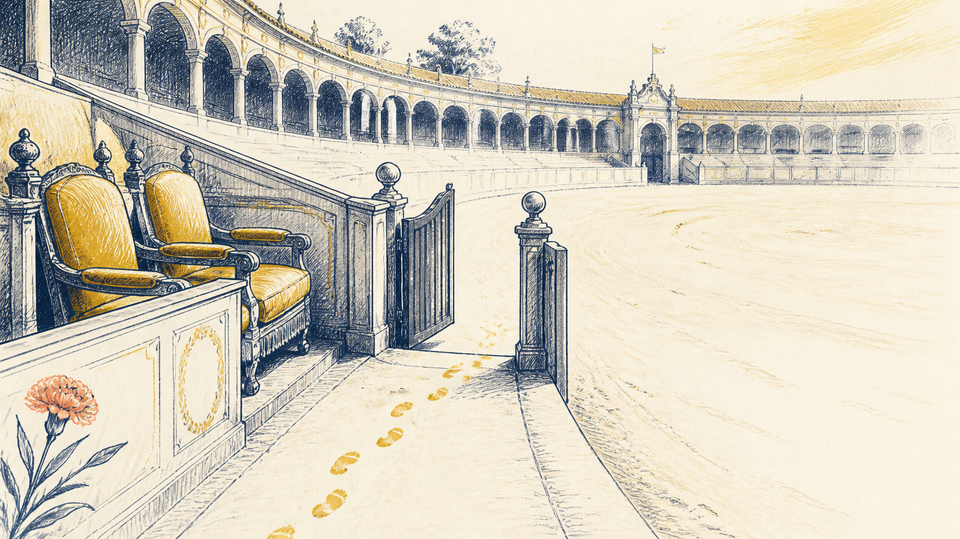
That's what a good seat can mean. Not a view of the field, but a gate onto it, and the choice of when to walk out.
The man who came back for the mines
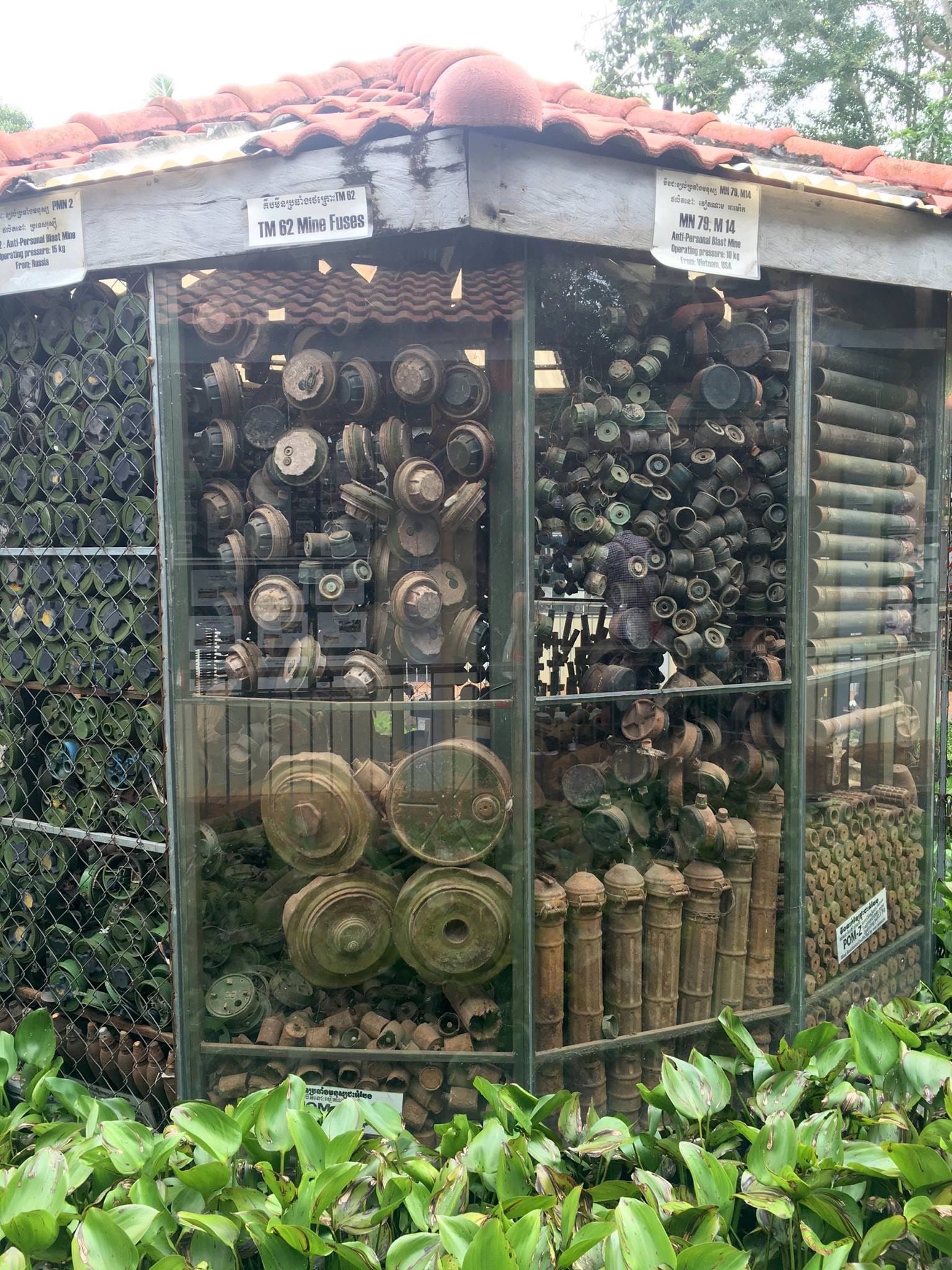
The landmine museum I visited outside Siem Reap was founded by a man named Aki Ra. As a child, he was orphaned under the Khmer Rouge and made a soldier; he laid mines for more than one army. After the war, he cleared them, working with the United Nations from 1991, and in 1999 he began showing the defused ones he'd collected, so that visitors would understand what was still in the ground ("Aki Ra," n.d.).
He had the worst seat of anyone in this story. He's also the one who went back onto the field.
The photographs I won't show you
During the early part of our time in Cambodia, I felt a great sense of guilt and shame. It felt like we were engaged in poverty tourism. We were walking past people living their lives as if they sat in invisible cages, there for our observation. I addressed it with the group during an early trip debrief and committed to better engaging rather than examining.
Some folks took many pictures of and with locals. I felt deeply conflicted about doing that, though I respect that it’s a personal choice, for the visitor and for the person in the frame.
The Cambodian filmmaker Rithy Panh survived the Khmer Rouge as a boy and spent his life making films about it. In his memoir, he writes, "Of course you can always look away… It's a universal freedom" (Panh, 2013). He means it as an accusation and a fact at once. Every seat in this series comes with that freedom. The question is what we do with it. The photos I kept allow me to look back rather than to look away.
I could show you those photographs and call it witness. Susan Sontag, whom I quoted in Part II, warned that sympathy can become a way of proclaiming our innocence. A stranger's child, photographed by a visitor and published without being asked, isn't witness. It's a souvenir. So I'll describe the seat instead of the child: mine was on the bus, on the tuk-tuk, and on foot.
The seat in Washington
Some seats are better than a visitor's. Last year, the vice president of the United States defended a ranked circle of care. "You love your family, and then you love your neighbor, and then you love your community," JD Vance said on Fox News, then your fellow citizens, and then the rest of the world. When critics pushed back, he posted, "Just google 'ordo amoris,'" the order of love, a concept that comes from Augustine (Associated Press & The Conversation, 2025).
I want to take the vice president seriously here, because his faith is serious to him. When he was received into the Catholic Church in 2019, he chose Augustine as his confirmation saint. He told the writer Rod Dreher he was "pretty moved by the Confessions," and said, "I hope my faith makes me more compassionate and to identify with people who are struggling" (Dreher, 2019).
So here is an invitation, not a gotcha. The Confessions is the book with Alypius in it, the law student from Part I who swore he'd keep his eyes shut at the Colosseum and then "drank in the savagery." Its author is the man who later told his congregation, "I myself once sat there too, and raged" (Fagan, 2011). The saint Vance chose is the one who wrote the most honest account we have of a good man in the cheap seats. Augustine's answer wasn't a ranking. It was a confession.
The late Pope Francis answered the ordo amoris argument directly, in a February 2025 letter to the American bishops. "The true ordo amoris that must be promoted," he wrote, "is that which we discover by meditating constantly on the parable of the 'Good Samaritan'… the love that builds a fraternity open to all, without exception" (Francis, 2025). That parable is a bystander story. Two religious men see a stranger beaten by the road, and they walk past. The one who stops is the outsider.
Vance has shown he can decline a seat. This month, when the Pentagon planned to livestream an execution, he publicly expressed doubts about it (Smyth & Price, 2026). That's the instinct this series is about. My hope, and I mean it as a hope, is that a man moved by the Confessions applies it to the stranger at the border as readily as to the camera at the gallows.
The children who chose
In "The State as Spectator" I wrote about Owensboro in 1936, where parents carried children on their shoulders to watch a hanging. Those children were brought to watch. They didn't choose their seats.
Twenty-seven years later, in Birmingham, children chose. On May 2, 1963, more than a thousand Black students skipped school and marched out of the 16th Street Baptist Church; hundreds were jailed. The next day, the city turned fire hoses and police dogs on them. The photographs, the Smithsonian's National Museum of African American History and Culture notes, "triggered outrage throughout the world," and helped move President Kennedy toward the Civil Rights Act (NMAAHC, n.d.).
Same country, same century, two sets of children. One was brought to the stands. The other walked onto the field, and the cameras turned the world into witnesses instead of spectators. The difference wasn't their age. It was who chose the seat.
Young people are still doing it. Last weekend, during student protests across Italy, a small group broke away from a march in Rome and went into the Colosseum, chanting and holding up placards, until authorities escorted them out (Euronews, 2026). Whatever you make of that, the picture is hard to miss: people coming down from the stands of the arena where Alypius once opened his eyes.
From spectator to spect-actor
I make theatre, so I'll end with a theatre-maker's answer. The Brazilian director Augusto Boal built a form he called Forum Theatre. A short scene of injustice is played once through. Then it's played again, and this time anyone in the audience can stop it, walk onstage, take a character's place, and try something different. Boal called those audience members spect-actors. The seat stops being an alibi and becomes a rehearsal.
The philosopher Hannah Arendt suggested something similar about Bonhoeffer's subject, stupidity. The sociologist William Davies, reading her, points out that she saw its remedy in imagination, "something closer to aesthetic judgment than to scientific judgment" (Davies, 2025). You can't argue someone out of a spell, Bonhoeffer said. You might be able to rehearse them out of it.
Where I'm sitting
Back to Falmouth, where this started. In 1887, a newspaper explained a hanging in one calm sentence, and the town turned the page. A hundred and thirty-nine years later, the same county has a public library on Robbins Avenue and a community theatre off Shelby Street. I spend my days in both. They're full of seats, and none of them is meant for watching someone else's suffering. A library seat is for reading the record. A theatre seat, at its best, is for rehearsing what you'd do.
Rooms built for watching have run through this whole series: a Lexington theatre turned into a slave jail, a Roman theatre turned into a fortress and then a home, a Salzburg riding school turned into the festival hall where a movie audience sang. None of those rooms decided their own purpose. The people holding the keys did. On the board of a small theatre in Falmouth, I’m one of the people holding a set.
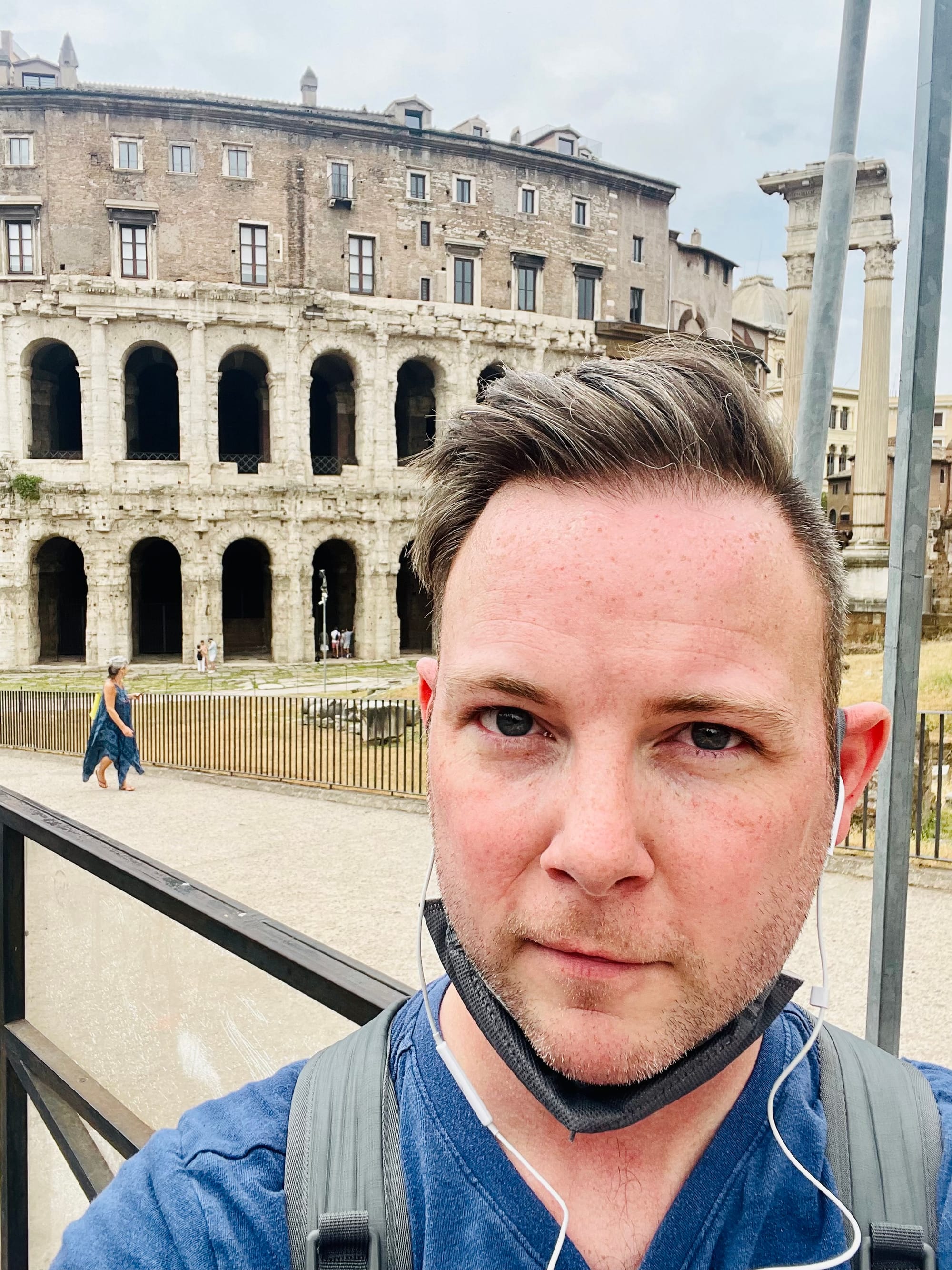
Three parts, three questions. In Part I: where are you sitting, and who sold you the ticket? In Part II: whose seat are you explaining from? And now: what is your seat for?
The good seat isn't the one with the best view. It's the one closest to the gate.
Keep going
Read
- Ervin Staub, The Roots of Evil: The Origins of Genocide and Other Group Violence (Cambridge University Press, 1989)
- Rithy Panh with Christophe Bataille, The Elimination (Other Press, 2013)
- Augusto Boal, Theatre of the Oppressed (Pluto Press)
- Pope Francis, Letter to the Bishops of the United States (February 10, 2025)
Visit
- The Cambodia Landmine Museum, near Banteay Srei, Siem Reap Province
The Seating Chart
- Part I: "The Cheap Seats"
- Part II: "The Press Box"
Earlier on Possibility Pages
References
Aki Ra. (n.d.). In Wikipedia. Retrieved October 29, 2026, from https://en.wikipedia.org/wiki/Aki_Ra
Associated Press & The Conversation. (2025, February 6). What is "ordo amoris"? Vice President JD Vance invokes this medieval Catholic concept. https://local10.com/news/politics/2025/02/06/what-is-ordo-amoris-vice-president-jd-vance-invokes-this-medieval-catholic-concept
Boal, A. (2008). Theatre of the oppressed (New ed.). Pluto Press. (Original work published 1974)
Davies, W. (2025, October 2). A critique of pure stupidity: Understanding Trump 2.0. The Guardian. https://www.theguardian.com/news/2025/oct/02/critique-pure-stupidity-understanding-donald-trump-2
Dreher, R. (2019, August 11). J.D. Vance becomes Catholic. The American Conservative. https://www.theamericanconservative.com/j-d-vance-becomes-catholic/
Euronews. (2026, October 25). Thousands march across Italy as protests bring isolated clashes with police. https://www.euronews.com/2026/10/25/thousands-march-across-italy-as-protests-bring-isolated-clashes-with-police
Fagan, G. G. (2011). The lure of the arena: Social psychology and the crowd at the Roman games. Cambridge University Press.
Francis. (2025, February 10). Letter of the Holy Father Francis to the bishops of the United States of America. The Holy See.
National Museum of African American History and Culture. (n.d.). The Children's Crusade. Smithsonian Institution. https://nmaahc.si.edu/blog/childrens-crusade
Panh, R., with Bataille, C. (2013). The elimination: A survivor of the Khmer Rouge confronts his past and the commandant of the killing fields (J. Cullen, Trans.). Other Press.
Smyth, J. C., & Price, M. L. (2026, October 9). VP JD Vance expresses doubts about Pentagon plan to livestream Fort Hood shooter's execution. Associated Press. https://abc7news.com/post/vp-jd-vance-expresses-doubts-pentagon-plan-livestream-fort-hood-shooter-nidal-malik-hasan-execution-firing-squad/19925713/
Sontag, S. (2003). Regarding the pain of others. Farrar, Straus and Giroux.
Staub, E. (1989). The roots of evil: The origins of genocide and other group violence. Cambridge University Press.